This blog post explores the concept of liquidity voids in Forex trading, detailing how they form, their implications for price movement, and strategies for trading around these voids. It emphasizes the role of smart money in market movements and provides practical examples to illustrate the concepts discussed.
In the world of Forex trading, understanding market dynamics is crucial for making informed decisions. One key concept that traders must grasp is the idea of liquidity voids. This blog post delves into what liquidity voids are, how they affect price movements, and strategies for trading around them.
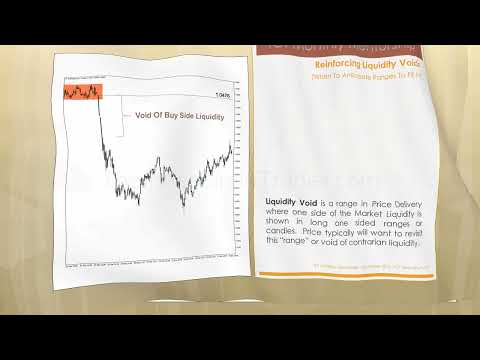
A liquidity void refers to a range in price delivery where one side of the market shows a significant lack of liquidity. This typically manifests as long, one-sided price movements or candles. When a liquidity void exists, price tends to revisit this area, which is characterized by a lack of buying or selling activity.
Liquidity voids form when price moves aggressively away from a consolidation area, typically characterized by long-bodied candles that indicate strong selling or buying pressure. For example, if price drops sharply with minimal buying activity, a liquidity void is created.
One common question among traders is how long a liquidity void will remain open. The duration can vary significantly; some voids may remain open for months, while others may close within a single trading session. The key to understanding this lies in observing the price action around the void.
To identify liquidity voids, traders should look for areas where price has moved sharply away from a consolidation zone. For instance, if a price drops from a range with minimal buying, this indicates a liquidity void that may need to be filled later.
When price approaches a liquidity void, traders can anticipate potential movements. For example, if price has moved down aggressively, it is likely to retrace back to fill the void. Traders can set buy orders at levels where they expect price to return, such as just above the liquidity void.
Consider a scenario where price drops from a consolidation area at 104.80 to 104.40, creating a liquidity void. Traders might anticipate that price will eventually return to the 104.76 level to fill this void. By placing buy orders around this level, traders can capitalize on the expected price movement.
Gaps in price action can also indicate liquidity voids. A gap occurs when the price moves from one level to another without trading in between. For instance, if price gaps down from 104.80 to 104.70, this gap can serve as a potential entry point for traders looking to sell.
When a gap occurs, traders can place limit orders at the gap level, anticipating that price will return to fill the gap. For example, if a trader identifies a gap at 104.70, they might place a sell order there, expecting price to retrace and fill the gap before moving lower.
Understanding liquidity voids is essential for Forex traders looking to enhance their trading strategies. By recognizing the formation of these voids and anticipating price movements, traders can make more informed decisions. Additionally, the interplay between liquidity voids and gaps provides further opportunities for strategic trading. As traders continue to learn and adapt, they can leverage these concepts to improve their market performance.
For those interested in deepening their understanding of liquidity voids, gaps, and other trading strategies, supplementary materials and examples will be provided in upcoming mentorship sessions. Stay tuned for more insights and practical applications in Forex trading.