
This blog post explores the concept of 'masbuk' in Friday prayers, discussing its definition, implications, and the relevant Islamic teachings. It highlights the importance of attending the Friday sermon, the rulings for those who arrive late, and the significance of maintaining a calm demeanor during prayers.
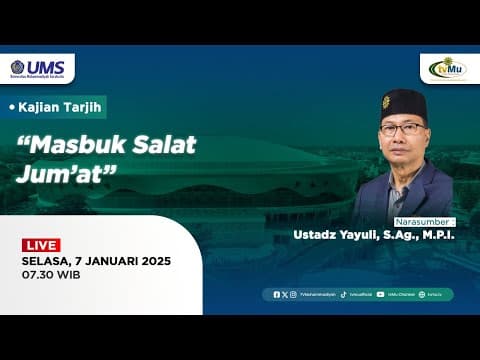
In the early hours of January 7, 2025, a significant online study session was held by the Tarjih Council of Universitas Muhammadiyah Surakarta (UMS). This session focused on the concept of "masbuk" in Friday prayers, a term referring to individuals who arrive late to the congregational prayer. The discussion aimed to deepen the understanding of Islamic teachings related to this topic, ensuring that participants could enhance their worship practices.
Masbuk refers to a worshipper who arrives late to the Friday prayer, specifically after the imam has begun the prayer, such as during the bowing (ruku) or even after the final sitting (tahiyat). According to various Islamic scholars, if a masbuk arrives after the imam has completed the prayer, they are required to perform the zuhr prayer instead.
Friday prayer (Salat Jum'at) is a congregational prayer performed on Fridays during the zuhr time, consisting of two units (rak'ahs) and is preceded by a sermon (khutbah). It is obligatory for every Muslim who is of sound mind and has reached maturity (mukalaf) to attend this prayer, as emphasized in Surah Al-Jumu'ah (62:9).
The khutbah is an integral part of the Friday prayer. It serves as a reminder and guidance for the congregation. The hadith narrated by Abu Hurairah states that attending the khutbah is essential, and those who arrive late should not rush but walk calmly to the prayer area. This emphasizes the importance of maintaining composure and focus during worship.
If a masbuk arrives and finds the imam in the second rak'ah, they should complete their prayer by performing the remaining rak'ahs after the imam concludes. However, if they arrive after the imam has completed the prayer, they must perform the zuhr prayer instead.
Several hadiths support the rulings regarding masbuk. For instance, it is narrated that the Prophet Muhammad (peace be upon him) said that if one hears the iqamah, they should proceed to the prayer calmly and complete what they missed. This guidance underscores the importance of not rushing and maintaining a tranquil state during prayer.
Travelers (musafir) are granted certain concessions in Islamic law. They are not obligated to perform the Friday prayer if they are traveling, and instead, they can perform the zuhr prayer. This flexibility is based on the understanding that travel can pose challenges to fulfilling religious obligations.
If you arrive late and miss the khutbah, your prayer is still valid, but it is recommended to strive to attend the khutbah in the future. The essence of Friday prayer lies in both the prayer and the sermon.
Yes, if you are a traveler or have a valid excuse that prevents you from attending the Friday prayer, you may perform the zuhr prayer instead.
While it is permissible, consistently arriving late is discouraged. The Prophet emphasized the importance of attending prayers on time, and it is better to strive for punctuality.
The discussion on masbuk in Friday prayers highlights the importance of understanding Islamic teachings regarding prayer attendance and etiquette. It encourages believers to prioritize their worship and strive for punctuality while also recognizing the allowances made for those who may face challenges in attending prayers on time. By adhering to these teachings, individuals can enhance their spiritual practice and maintain a strong connection with their faith.
In closing, the session concluded with a reminder for all participants to fill the mosques and engage actively in their religious duties, fostering a community of worshippers dedicated to their faith.



















