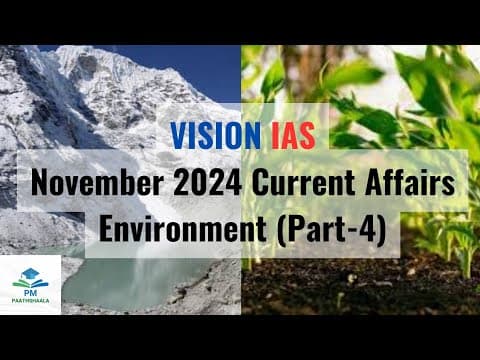
In this blog post, we will explore two significant topics from the November 2024 current affairs: natural farming initiatives in India and the implications of glacial lake outburst floods (GLOFs) in the Himalayas. These topics are crucial for understanding environmental sustainability and agricultural practices in the context of climate change.
Natural Farming in India
Overview of Natural Farming
Natural farming is an agricultural practice that emphasizes chemical-free farming methods. Recently, the Union Cabinet launched the National Mission on Natural Farming (NMNF), which aims to promote sustainable agricultural practices across India. This initiative is a part of the Ministry of Agriculture and Farmers Welfare's efforts to enhance food safety and farmer income.
Objectives of the National Mission on Natural Farming
The NMNF has several key objectives:
- Promotion of Safe and Nutritious Food: The mission aims to ensure that farmers produce food that is free from harmful chemicals and pesticides.
- Support for Farmers: By reducing the input costs of cultivation, the mission seeks to increase farmers' income and decrease dependency on external inputs.
- Branding of National Products: The initiative aims to enhance the marketability of natural farming products both nationally and internationally.
- Integrated Agriculture Models: The mission promotes the integration of agriculture with animal husbandry, utilizing local resources effectively.
Components of Natural Farming
Natural farming incorporates several components:
- Beej Amrit: A seed treatment method using cow dung and urine to enhance seed quality.
- Jeev Amrit: A microbial solution that promotes soil health.
- Mulching: Using crop residues to retain soil moisture.
- Biological Pest Control: Utilizing natural predators to manage pests instead of chemical pesticides.
Benefits of Natural Farming
Natural farming offers numerous benefits:
- Increased Yield: By maximizing production factors like labor and soil health, farmers can achieve better yields.
- Higher Income: Reduced reliance on costly fertilizers leads to increased profitability for farmers.
- Healthier Food: The absence of synthetic chemicals promotes better health outcomes for consumers.
- Environmental Conservation: Natural farming practices enhance soil biology and biodiversity, contributing to sustainable agriculture.
Challenges in Implementing Natural Farming
Despite its benefits, natural farming faces several challenges:
- Yield Uncertainty: Farmers may experience variability in crop yields, leading to income risks.
- Input Supply Issues: Availability of essential inputs like cow dung may be inconsistent.
- Knowledge Gaps: There is a need for extensive training and awareness programs for farmers.
- Market Challenges: Lack of dedicated supply chains and consumer awareness can hinder market access for natural products.
Glacial Lake Outburst Floods (GLOFs)
Understanding GLOFs
GLOFs occur when glacial lakes, formed by melting ice, experience sudden releases of water due to dam failures or ice melt. Recent reports from the Central Water Commission (CWC) indicate that the surface area of glacial lakes in the Himalayas is expanding, raising concerns about potential flooding events.
Recent Findings
The CWC's report highlights:
- An increase in the area of glacial lakes in India from 2011 to 2024.
- The presence of 67 high-risk glacial lakes in India, particularly in regions like Ladakh, Himachal Pradesh, and Uttarakhand.
- The potential for significant impacts on downstream ecosystems and infrastructure due to GLOFs.
Causes and Impacts of GLOFs
GLOFs can lead to devastating consequences, including:
- Infrastructure Damage: Rapid flooding can destroy roads, buildings, and agricultural land.
- Environmental Degradation: Increased sedimentation and changes in river dynamics can harm local ecosystems.
- Human Displacement: Communities living near glacial lakes may face threats to their safety and livelihoods.
Management Strategies for GLOFs
To mitigate the risks associated with GLOFs, several initiatives are underway:
- National Disaster Management Authority (NDMA): Guidelines for managing GLOFs have been established to identify high-risk lakes and develop early warning systems.
- International Cooperation: Collaborative efforts are needed to monitor and manage glacial lakes across borders.
Conclusion
Natural farming and the management of glacial lake outburst floods are critical issues that require immediate attention and action. By promoting sustainable agricultural practices and addressing the risks associated with climate change, we can work towards a healthier environment and a more resilient agricultural sector. The initiatives discussed in this blog post are steps in the right direction, but ongoing efforts and collaboration will be essential for long-term success.