
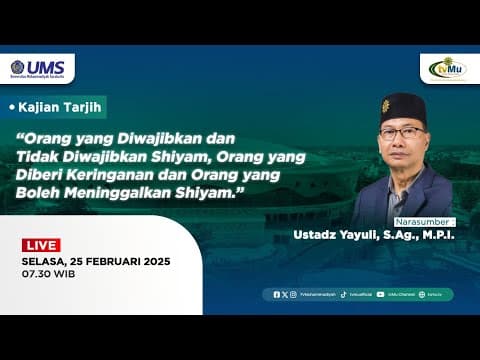
This blog post explores the obligations and exemptions related to fasting during Ramadan, as discussed in a recent online seminar. It covers who is required to fast, who is exempt, and the conditions under which fasting can be skipped or compensated. Additionally, it addresses common misconceptions and provides guidance on how to handle specific situations related to fasting.
As the holy month of Ramadan approaches, it is essential for Muslims to understand the obligations and exemptions related to fasting. This blog post summarizes key points from a recent online seminar led by Ustaz Zazuli, focusing on who is required to fast, who is exempt, and the conditions under which fasting can be skipped or compensated.
The seminar began with a prayer and a reminder of the significance of Ramadan, emphasizing the importance of understanding the rules surrounding fasting. Ustaz Zazuli highlighted that the discussion would focus on the obligations of fasting (Shiyam) and the exemptions provided by Islamic law.
According to Islamic teachings, all adult Muslims (mukalaf) are required to fast during Ramadan. This requirement is based on the Quranic verse from Surah Al-Baqarah (2:183), which addresses the believers directly, indicating that fasting is obligatory for all who are capable. The term "mukalaf" refers to individuals who have reached maturity and are accountable for their actions, which includes:
Being mukalaf means that individuals are responsible for their actions, and their deeds will be recorded. Therefore, it is crucial for those who are mukalaf to adhere to the fasting requirements during Ramadan.
Certain individuals are exempt from fasting during Ramadan but are required to make up for the missed fasts later. These include:
Ruksah refers to the allowances given to individuals who cannot fulfill their fasting obligations due to valid reasons. This includes:
For those who cannot fast due to valid reasons, fidyah is an option. This involves providing food to the needy, typically equivalent to 0.6 kg of staple food for each day of fasting missed.
During the seminar, several questions were raised regarding fasting practices:
Understanding the obligations and exemptions related to fasting during Ramadan is crucial for all Muslims. It is essential to be aware of the conditions that allow for exemptions and the importance of making up missed fasts or providing fidyah when necessary. As we approach Ramadan, let us prepare ourselves spiritually and physically to observe this holy month with sincerity and devotion.
May Allah grant us the strength to fulfill our obligations and accept our fasts.
Wa Assalamualaikum Warahmatullahi Wabarakatuh.



















