
This blog post explores the complexities of phosphorus management in agriculture, highlighting the importance of best management practices (BMPs) to mitigate phosphorus loss and improve water quality. It summarizes presentations from experts discussing the phosphorus cycle, agricultural BMPs, and the role of cover crops in phosphorus transport.
Welcome to the North Central Region Water Network's webinar series, where we delve into various water-related topics. In this session, we focus on phosphorus management and its implications for water quality. Phosphorus is a critical nutrient in agriculture, but its mismanagement can lead to significant environmental issues, including water pollution.
Phosphorus exists in three major pools in the soil: the fixed pool, the active pool, and the soil solution. The soil solution phosphorus is readily available for plant uptake, making it crucial for agricultural productivity. Several factors influence phosphorus availability, including soil organic matter, clay content, soil minerals, and pH levels.
Research indicates that phosphorus buildup in soils has been a long-term issue, particularly in continuous corn systems where fertilizers have been applied over decades. Studies show that phosphorus stratification occurs, especially in no-till systems, where fertilizers are concentrated in the upper soil layers, leading to potential runoff into water bodies.
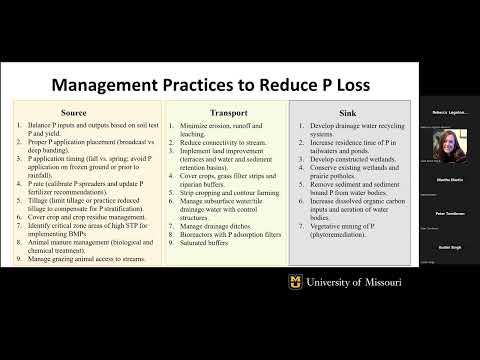
Effective phosphorus management begins with understanding and managing its sources. Key practices include:
To reduce phosphorus transport to water bodies, practices such as:
Managing phosphorus sinks involves practices that enhance the retention of phosphorus in agricultural systems, such as:
Cover crops play a dual role in phosphorus management. While they can help reduce soil erosion and improve soil health, they may also contribute to increased phosphorus availability at the soil surface, particularly in no-till systems. This highlights the need for careful management of cover crops to balance their benefits and potential risks.
Managing phosphorus loss from agricultural fields is complex and requires a multifaceted approach. Understanding the role of legacy phosphorus, implementing a suite of BMPs, and managing runoff water are critical to reducing phosphorus loading into headwater streams. Ongoing research and collaboration among agricultural producers, researchers, and policymakers are essential to develop effective phosphorus management strategies that protect water quality.
We thank all the researchers and institutions involved in advancing our understanding of phosphorus management and its impact on water quality. For further inquiries or detailed discussions, please reach out to the presenters or visit the North Central Region Water Network's website for additional resources and recordings of past webinars.



















