
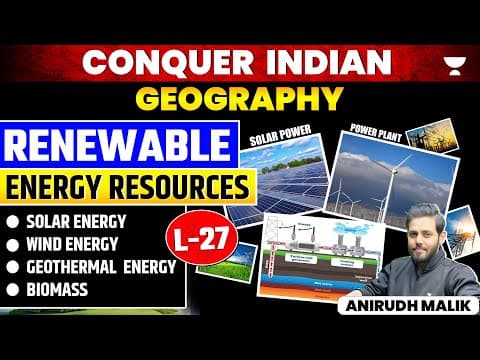
This blog post explores the various renewable energy sources in India, their significance, current statistics, and future goals, emphasizing the country's commitment to reducing carbon emissions and transitioning to sustainable energy.
Renewable energy sources have gained immense importance in recent years due to the increasing concerns over climate change and global warming. This blog post aims to provide a detailed overview of renewable energy sources in India, their significance, and the initiatives taken by the government to promote sustainable energy.
Renewable energy sources are those that can be replenished naturally over time. Unlike conventional energy sources such as coal, petroleum, and natural gas, which are finite and contribute to greenhouse gas emissions, renewable sources are sustainable and environmentally friendly. The major types of renewable energy include:
The significance of renewable energy has escalated due to the adverse effects of conventional energy sources on the environment. The industrial revolution has led to an increase in global temperatures, resulting in climate change, melting glaciers, and rising sea levels. To combat these issues, India has committed to reducing its reliance on conventional energy sources and increasing the use of renewable energy.
India has set ambitious targets for renewable energy consumption:
As of now, India ranks fourth globally in renewable energy production. The breakdown of energy generation sources is as follows:
Solar energy is harnessed from the sun's rays using solar panels equipped with photovoltaic cells. India is the third-largest producer of solar energy globally, generating approximately 9.76 GW. The country plans to expand its solar capacity significantly by establishing new solar parks and hybrid projects.
Wind energy is generated by converting the kinetic energy of wind into electrical energy using wind turbines. India ranks fourth in the world for wind energy production, generating around 47.36 GW.
Hydro energy is produced by harnessing the energy of flowing water, typically through dams. India has a significant capacity for hydroelectric power, contributing to 30% of its renewable energy production.
Biomass energy is derived from organic materials, including agricultural waste. It contributes to about 7% of India's renewable energy production.
Geothermal energy utilizes the heat from the Earth's interior to generate electricity. India has several geothermal provinces, including regions in Himachal Pradesh and Ladakh.
India's commitment to renewable energy is evident through its ambitious targets and ongoing projects. By focusing on sustainable energy sources, the country aims to combat climate change and reduce its carbon footprint. As India continues to invest in renewable energy, it sets an example for other nations to follow in the pursuit of a greener future.



















