
This blog post explores the impact of winter snow on solar panel production in Canada, detailing the effects of snow coverage, the importance of regular maintenance, and the potential energy gains from clearing snow off solar panels.
Welcome back to Rey Solar TV! In this post, we will discuss a common concern for solar panel owners in Canada: how winter weather, particularly snow, affects solar production. We will explore the impact of snow coverage on solar panels, demonstrate the differences in energy production before and after snow removal, and provide insights on managing solar energy systems during the winter months.
We are looking at a seven kilowatt DC, five kilowatt AC grid-tied net metering system. A frequent question we receive is about solar production during winter months. When snow covers the solar panels, it significantly reduces their production capacity.
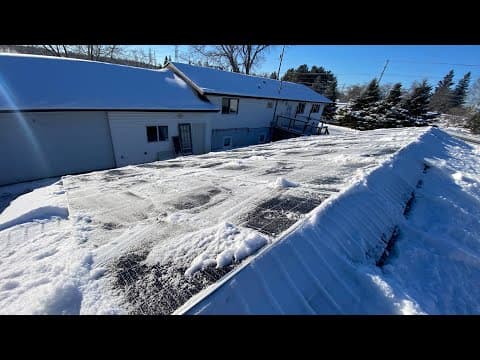
In our current scenario, we observed that the panels were partially covered with snow. Initially, we had about two to three inches of snow on the top row of panels, while the bottom row had only about half an inch. This difference in snow coverage leads to varying production levels across the array.
At around 10 AM, we began monitoring the solar production using the EMA Live app. The sun was at its highest point for the day, but we know that until the winter solstice on December 21st, the sun's position will continue to drop.
Before we started clearing the snow, the production levels were quite low. The east side of the array showed only about 2 watts, while the west side reached approximately 8 watts. This stark difference illustrates how snow coverage can drastically reduce solar energy production.
As we began to clear the snow from the panels, we noticed an immediate increase in production. After removing snow from half of the panels, we recorded a production increase to about 26 watts on the west side. This was a direct result of clearing the snow, demonstrating the importance of maintaining solar panels during winter.
When clearing snow from solar panels, safety is paramount. Ensure you are in good health and comfortable working on the roof, as conditions can be slippery. If you are not confident in your ability to safely remove snow, it may be best to hire a professional.
After approximately 35 minutes of clearing snow, we observed a significant increase in production. The west side of the modules reached a peak of 91 watts, while the east side also showed improvements. The increase in production was not solely due to the sun's intensity but primarily because we had removed the snow.
After clearing the snow, we recorded a peak power output of approximately 1.4 kilowatts. This increase highlights the benefits of maintaining solar panels during winter months, especially in regions like central Canada, where average sunlight hours during winter are only about three and a half to four hours of peak sunlight.
By the end of the day, we had produced a total of approximately 3.94 kilowatt-hours of energy. This production level illustrates the importance of snow removal for maximizing energy output from solar panels during winter.
In summary, snow coverage can significantly impact solar production in winter. Regular maintenance, such as clearing snow from panels, can lead to substantial increases in energy production. However, it is essential to weigh the costs of hiring someone to do this against the potential energy gains. For those comfortable with the process, safely removing snow can enhance the efficiency of your solar energy system.
As always, we aim to empower both installers and DIY enthusiasts. If you found this information helpful, please leave a comment or subscribe for more insights on solar energy management.



















