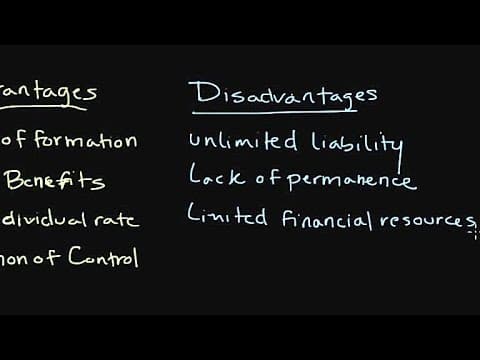
This blog post explores the concept of sole proprietorships, detailing their advantages such as ease of formation and tax benefits, as well as significant disadvantages including unlimited liability and lack of permanence. It provides a comprehensive overview for individuals considering this business structure.
In the realm of business ownership, individuals have various options to consider when forming their enterprises. Each structure comes with its own set of implications, including initial costs, long-term profitability, and tax considerations. This post will focus on one of the simplest forms of business ownership: the sole proprietorship.
A sole proprietorship is a business structure characterized by having a single owner. This means there are no partners or board of directors involved in the ownership. It is the easiest type of business to set up, primarily due to its low cost and minimal paperwork. As the sole proprietor, you are in charge of all decisions, which can be both empowering and challenging.
One of the most significant advantages of a sole proprietorship is the ease of formation. To establish this type of business, all you need to do is start operating. According to the IRS, if you operate a business alone and do not set up a more complex structure, you are automatically considered a sole proprietor. This simplicity means there are virtually no costs associated with setting up the business, making it an attractive option for many entrepreneurs.
Sole proprietorships also offer certain tax advantages. Income generated by the business is reported on the owner's personal tax return, allowing the proprietor to benefit from individual tax rates, which are generally lower than corporate tax rates. In the U.S., corporate tax rates can be as high as 40%, while individual rates are progressive, meaning they vary based on income. This structure can lead to significant tax savings for the owner.
Another benefit of a sole proprietorship is the retention of control. As the sole owner, you have the authority to make all decisions regarding the business, including what to produce, how to market it, and who to hire. This level of control can be appealing for those who prefer to steer their business in a specific direction without needing to consult with partners or a board.
While there are clear advantages to operating as a sole proprietor, there are also significant disadvantages that potential business owners should consider.
The most critical disadvantage of a sole proprietorship is the concept of unlimited liability. Since the business is not a separate legal entity, the owner is personally liable for all debts and obligations incurred by the business. If the business cannot repay its debts, the owner's personal assets, such as savings or property, can be at risk. This liability can be particularly concerning for businesses that operate in high-risk industries, such as construction or consumer products.
Another drawback is the lack of permanence associated with sole proprietorships. If the owner passes away, the business ceases to exist unless there are formal arrangements in place to transfer ownership. This lack of continuity can be detrimental to employees and clients who rely on the business's ongoing operations.
Sole proprietorships often face limitations in financial resources. Unlike partnerships or corporations, where multiple individuals can pool their financial and intellectual resources, a sole proprietorship relies solely on the owner's assets and abilities. This limitation can hinder growth and increase the risk of failure, particularly if the owner does not have sufficient capital or expertise.
In summary, sole proprietorships are an accessible and straightforward way to start a business, offering benefits such as ease of formation, tax advantages, and complete control. However, potential owners must weigh these advantages against significant disadvantages, including unlimited liability, lack of permanence, and limited financial resources. For those considering this business structure, it is essential to evaluate the risks and benefits carefully to determine if a sole proprietorship aligns with their business goals and personal circumstances.