This blog post explores the concept of soul contracts as reported in near-death experiences, questioning their validity and the implications of signing such contracts before incarnation. It discusses the emotional and psychological impacts of these beliefs and offers guidance on how to revoke these contracts to achieve spiritual freedom.
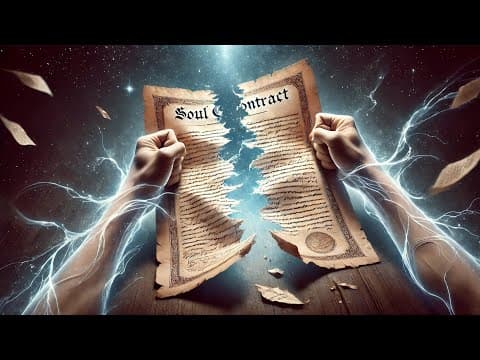
The phenomenon of near-death experiences (NDEs) often includes encounters with archonic light beings and the presentation of what are termed "soul contracts." These contracts are said to outline the terms of our existence on Earth, including challenges and missions we are meant to fulfill. This blog post delves into the nature of these soul contracts, the implications of their existence, and the arguments surrounding their validity.
Many individuals who have undergone NDEs report being shown a soul contract after meeting a guiding entity. This contract supposedly details the life experiences and challenges they agreed to face during their time on Earth. For instance, Matt S. from the Near-Death Experience Research Foundation noted that he became aware of unfinished tasks he had contracted to complete, reinforcing his belief in reincarnation and the idea that we choose our life paths.
Shantel L. expressed feelings of failure for not accomplishing her life mission, emphasizing that the purpose of our existence is paramount in the afterlife. She stated, "We ask to be born and we enter into a contract; we come to Earth with a purpose."
According to Rachel E., these contracts are made with God and include various hardships and challenges. This raises significant questions about the fairness and transparency of such agreements. If the terms of these contracts inherently include suffering and the expectation of perfection, one must wonder why anyone would willingly agree to such conditions.
A critical point of contention is the claim that our memories are wiped before each incarnation. If individuals cannot recall signing these contracts, how can they be held accountable for them? The argument posits that without memory, the validity of these contracts is questionable. Contracts typically require informed consent, which is impossible if one lacks memory of the agreement.
The ethical implications of soul contracts are profound. Contracts must be signed under fair conditions, with full disclosure and without coercion. The notion that a spirit, unfamiliar with earthly existence, could fully comprehend the implications of repeated reincarnations is dubious. The terms of these contracts appear to be one-sided and oppressive, raising concerns about their legitimacy.
Some theorists, like Howdy Kowski, suggest that the existence of soul contracts may be a narrative constructed to explain human suffering. They argue that these contracts are fictional constructs, manipulated by higher powers to maintain control over souls. Wayne Bush noted that some NDE experiencers claim to have encountered the demiurge, suggesting that these contracts may be used to enforce compliance with reincarnation.
Given the questionable nature of soul contracts, many believe it is essential to revoke them. This can be done through a personal ceremony where individuals declare their sovereignty and nullify any agreements made without their conscious consent. This act of revocation is seen as a way to reclaim one's spiritual autonomy.
The concept of soul contracts, as presented in near-death experiences, raises significant ethical and philosophical questions. The validity of these contracts is highly debatable, particularly when considering the implications of memory erasure and the potential for manipulation. By understanding and actively revoking these contracts, individuals can strive for spiritual freedom and autonomy, ensuring that their souls are not bound by agreements made under questionable circumstances.