
This blog post explores the concept of sustainability transitions, tracing its origins, growth, and significance in addressing environmental challenges. It highlights the shift from traditional innovation models to a systems-based approach, emphasizing the role of networks and research in fostering inclusive and effective transitions.
In the previous segment, we delved into the concept of sustainability transitions, which refers to the fundamental changes in systems such as energy, food, and transport over extended periods. It is crucial to note that the term used is "sustainability transitions" rather than "sustainable transitions," as the former emphasizes the broader concept of environmental sustainability. The term "sustainable" can sometimes imply financial sustainability, particularly in business contexts. Thus, embedding the idea of transitions within environmental sustainability is essential.
Sustainability transitions are not merely about new technologies; they encompass shifts in infrastructures, institutions, behaviors, and values. To understand the significance of this concept, we must trace the evolution of sustainability transitions research, examining its origins, objectives, and relevance in today's world.
The field of sustainability transitions research emerged from the study of innovations in the early 1990s. Scholars from various disciplines began to question how innovation occurs and why some innovations succeed while others fail. Traditionally, innovation was perceived as a linear process, akin to a pipeline: scientists invent new technologies, industries adopt them, and consumers eventually use them. This model was exemplified during the Green Revolution, where agricultural research centers developed new crop varieties that were then transferred to farmers through established systems.
However, this pipeline model lacked feedback mechanisms and struggled to accommodate ideas originating outside the established research systems. For instance, the system of rice intensification, which began in Madagascar, faced resistance in countries like India because it did not stem from the traditional agricultural research framework. This highlighted the limitations of the pipeline model in explaining why societies cling to polluting technologies and why promising green alternatives take time to gain traction.
Researchers such as Ari Rip and Rene Kem began to explore how technologies are embedded within regimes—stable systems characterized by rules, expectations, habits, and power structures. In 2002, Frank Gils published a pivotal paper introducing the Multi-Level Perspective (MLP), a framework for studying transitions. This framework shifted the focus from isolated inventions to understanding the complex interplay of systems, behaviors, and governance.
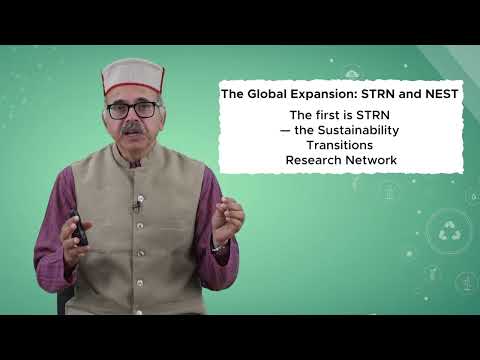
As the 21st century progressed, the body of work surrounding sustainability transitions expanded rapidly, particularly in Europe. By 2010, the Sustainability Transitions Research Network (STRN) was established, uniting hundreds of researchers interested in systemic or sociotechnical change. This network has played a crucial role in fostering collaboration and advancing the field.
I had the opportunity to attend the annual international sustainability transitions conference in June 2024 in Oslo, where over 500 scholars presented their research. The growth of this field in Europe was impressive, yet it was disheartening to observe the limited participation from Indian scholars in this interdisciplinary domain.
Sustainability transitions research represents a novel approach to understanding change. It integrates concepts from various disciplines, including Science and Technology Studies (STS), which examine how technologies are influenced by societal factors, and Evolutionary Economics, which explores how habits and routines can lead to lock-in effects. Environmental policy research investigates how institutions adapt (or fail to adapt) to change, while innovation studies focus on the scaling and diffusion of new ideas.
Researchers began to develop a new lexicon to discuss transitions rather than isolated inventions. They studied niches—protected spaces where new ideas can flourish—regimes that represent dominant systems resistant to change, and landscapes, which encompass broader forces like climate change and economic shocks that can disrupt existing systems.
This intersection of disciplines marked the birth of sustainability transitions research, which has since matured and expanded globally. Two major networks have been instrumental in this development: STRN and the Newcomers to Sustainability Transitions Network (Nest). STRN focuses on significant questions regarding real-world transitions, while Nest supports early-career researchers, particularly from the Global South, and addresses issues of power and knowledge representation.
You may wonder why this field matters, especially in the context of India. The answer lies in the ongoing transitions we are witnessing, such as India's ambitious plan for 500 gigawatts of non-fossil energy, the rise of agroecology in Gujarat, and clean mobility initiatives in cities like Kochi and Bengaluru. However, these transitions are often uneven, slow, and not inclusive. Some ideas take too long to scale, while others may be co-opted by corporate interests, leaving marginalized groups—such as women, small farmers, and low-income communities—behind.
Sustainability transitions research provides valuable concepts and tools to understand the resistance to change within systems. It helps identify opportunities for transition, akin to how entrepreneurs spot market gaps. Furthermore, it aids in designing better experiments and policies, supporting actors at various levels, from local innovators to national planners.
Despite the growing body of research, India's contribution to sustainability transitions literature remains low, particularly in areas like agriculture and rural livelihoods. In November 2023, the Institute of Rural Management and the Indian Institute of Technology Delhi, along with the Network of Rural and Agrarian Studies, hosted an international conference on managing sustainability transitions in agriculture at Anand. This highlights the significant scope for further research and the need for India-specific perspectives in this emerging field.
In conclusion, sustainability transitions research is crucial for understanding and facilitating the systemic changes necessary for a sustainable future. As we continue to navigate these transitions, it is imperative to foster a diverse and inclusive community of practice that can address the unique challenges faced in different contexts, particularly in India.



















