
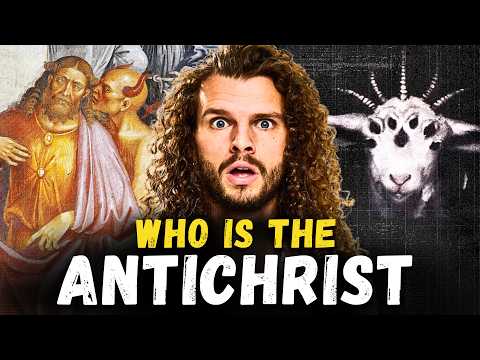
The concept of the Antichrist has evolved over 2,000 years, originating from early Christian texts where it referred to multiple deceivers rather than a single figure. Throughout history, various leaders like Nero, the Pope, Napoleon, Hitler, and modern politicians have been labeled as the Antichrist. Contemporary views, including those of tech billionaire Peter Thiel, suggest the Antichrist may be a system of control rather than a person, reflecting ongoing fears about power, deception, and end
Every generation has believed it has identified the Antichrist, from Nero in early Christianity to the Pope in medieval times, Napoleon in the 1800s, Hitler in the 1900s, and various American presidents in the 2000s. This persistent yet elusive figure raises a critical question: if the Antichrist is the most significant villain in human history, why has everyone been so confident yet so wrong for over 2,000 years?
This article explores the origins, evolution, and modern interpretations of the Antichrist, tracing its journey from early Christian scripture through centuries of theology, accusations, popular culture, and contemporary discourse.
The term "Antichrist" comes from the Greek word Antichristos, meaning "against Christ" or "in place of Christ." It implies not just opposition but a counterfeit or substitute for Christ. Surprisingly, the word appears only four or five times in the entire Bible, exclusively in the letters attributed to the Apostle John. The Book of Revelation, often associated with the Antichrist, never uses the term.
John's epistles describe the Antichrist not as a single figure but as "many Antichrists"—anyone who denies Jesus as the Christ. He speaks of a "spirit of the Antichrist," a force of deception active even in his time. Thus, originally, the Antichrist was a category of deceivers rather than a singular end-time villain.
Other New Testament texts contribute to the Antichrist narrative:
Paul's Second Letter to the Thessalonians describes the "man of lawlessness," a figure opposing God, exalting himself, and performing false miracles. Though Paul never calls him the Antichrist, later readers linked the two.
The Book of Revelation introduces the "beast," a creature empowered by Satan demanding worship worldwide, associated with the infamous number 666.
These texts, written in different contexts and styles, were later woven together by early church fathers like Irenaeus and Hippolytus into a singular narrative of a supreme evil figure who would appear before Christ's second coming.
Hippolytus introduced the idea of the Antichrist as a dark mirror of Jesus—born of impurity, performing counterfeit miracles, and gathering sycophantic followers. This template has influenced every depiction of the Antichrist since.
The fear of a supreme deceiver is not unique to Christianity:
Islam has the figure of the Dajjal, a false Messiah who deceives humanity before being defeated by Jesus (Isa bin Maryam), regarded as a prophet.
Judaism lacks a direct equivalent but has traditions about false Messiahs and figures like Armilus, an anti-Messiah who persecutes Israel before the true Messiah arrives.
These parallels highlight a widespread religious concern about deception and false salvation.
Throughout history, many powerful figures have been accused of being the Antichrist, often reflecting the accusers' fears and biases:
Nero: Early Christians linked Nero to the number 666 through gematria, a system assigning numerical values to letters, revealing coded messages in scripture.
The Pope: During the Protestant Reformation, Martin Luther explicitly identified the papacy as the Antichrist, accusing it of false authority and deception.
Napoleon: Seen by some as an unstoppable conqueror and self-crowned emperor, Napoleon was also linked to the Antichrist through numerological calculations.
Hitler: His demand for loyalty, racial ideology, and persecution of Jews led many Christian writers to label him the Antichrist, though some theologians cautioned against this to avoid diminishing human responsibility.
Modern Political Figures: Barack Obama and Donald Trump have both been accused by different groups of being the Antichrist, often based on numerology, charisma, or political opposition.
This pattern shows that accusations often say more about societal fears than about the accused individuals.
Popular culture has shaped and perpetuated the Antichrist narrative:
Rosemary's Baby and The Omen portray the Antichrist as a sinister child born of Satan, a trope that has become a horror staple.
The Left Behind Series by Tim LaHaye and Jerry B. Jenkins fictionalizes the end times, featuring a charismatic politician, Nicolae Carpathia, as the Antichrist. The series sold millions of copies and influenced Christian popular imagination.
Vladimir Solovyov's "A Short Tale of the Antichrist" presents a more nuanced figure—a humanitarian who unites the world but subtly replaces Christ with himself, offering everything Christ promised except Christ himself.
These portrayals reflect and shape public perceptions of the Antichrist.
In the 19th century, John Nelson Darby developed pre-millennial dispensationalism, a detailed end-time timeline featuring a singular Antichrist leading a one-world government before Christ's return. This framework was popularized by the Scofield Reference Bible (1909), which embedded Darby's ideas into its annotations, influencing generations of fundamentalist Christians.
Later authors like Hal Lindsey and televangelist Pat Robertson expanded on these ideas, linking the Antichrist to global conspiracies involving the Illuminati and secret societies. These theories have been both popular and controversial.
Recently, tech billionaire Peter Thiel has proposed a radical reinterpretation: the Antichrist is not a person but a system—a global architecture of surveillance and control that deceives humanity by promising salvation but delivering submission.
Thiel draws on the work of René Girard and suggests that the Antichrist manifests through technology, algorithms, and institutions that shape behavior and information, creating a counterfeit salvation.
This view resonates with current concerns about AI, surveillance, and loss of privacy. Some religious thinkers warn that reliance on AI for guidance may represent turning away from Christ, embodying the Antichrist spirit.
The rise of AI technologies like ChatGPT has sparked apocalyptic fears:
Some envision a "mark of the beast" system using AI for global surveillance, controlling commerce, speech, and loyalty.
Theologically, the concern is that AI could replace spiritual discernment, becoming an "instead of Christ" entity.
Culturally, AI's singularity and intelligence explosion narratives resemble rival religious systems with their own prophets and end-time stories.
These fears reflect broader anxieties about technology's role in society.
The Antichrist concept has evolved from a biblical category of deceivers to a singular apocalyptic villain, shaped by theology, history, culture, and now technology. Accusations have shifted with the times, often reflecting societal fears more than objective realities.
Peter Thiel's system-based interpretation challenges traditional views, suggesting that the Antichrist may be a pattern of power and deception embedded in systems rather than a single individual.
This perspective invites us to consider the ongoing human struggle with evil, deception, and false salvation across history and into the digital age.
Ultimately, whether one views the Antichrist as a person, a system, or a metaphor, the enduring lesson is to remain vigilant against deception and to seek truth and integrity in faith and life.
The search for the Antichrist continues to captivate and concern many. Perhaps the original warning from John—that "many Antichrists have come"—is a timeless diagnosis of the recurring patterns of evil in human history.
As we navigate a complex world shaped by technology and power, understanding these patterns may be more important than ever.
What do you think about the Antichrist? Is it a person, a system, or something else entirely? Share your thoughts and continue the conversation.
This exploration reflects a broad and nuanced understanding of the Antichrist, drawing from scripture, history, theology, and contemporary discourse to provide a comprehensive view of this enduring and evolving concept.



















