
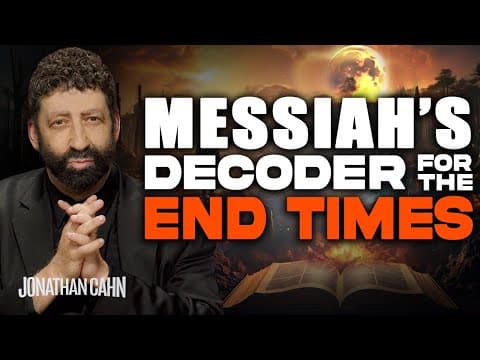
Jonathan Cahn's sermon explores the prophetic messages in the Book of Revelation, emphasizing the significance of current events as signs of the end times, the importance of faith amidst tribulation, and the ultimate victory promised to believers.
In a recent sermon, Jonathan Cahn delves into the prophetic messages contained within the Book of Revelation, drawing connections between biblical texts and contemporary events. He emphasizes that what God foretold is unfolding in our time, and rather than instilling fear, these revelations should encourage believers.
Cahn references Matthew 24:21, which speaks of a Great Tribulation that has never been seen before and will never occur again. He highlights that if these days were not cut short, no life would be saved, but for the sake of the elect, they will be. This sets the stage for understanding the tribulations described in Revelation, where the Greek word for tribulation, "thyis," signifies great affliction, anguish, and persecution.
Cahn points out that many may feel as though they are already experiencing tribulation in their lives. He cites Matthew 24:6, which warns of wars and rumors of wars, urging believers not to be alarmed as these events are merely the beginning of birth pangs. He connects this to Revelation 6, where the opening of the Seven Seals reveals the Four Horsemen: conquest, war, famine, and death.
Cahn explains that these horses represent the calamities that will befall the earth, aligning with the warnings given by Jesus in the Gospels. He also discusses the cataclysmic events described in both Matthew and Revelation, such as earthquakes and celestial disturbances.
In Matthew 24:29, it is stated that the sun will be darkened and the moon will not give its light. Cahn draws parallels to Revelation 6, where similar imagery is used. He cautions against interpreting these signs solely as solar and lunar eclipses, suggesting instead that they represent extraordinary cosmic events indicative of divine judgment.
Cahn further explores Matthew 24, where it mentions that the powers of the heavens will be shaken. He intriguingly connects this to the word "uranium," suggesting a potential link to nuclear destruction. He posits that the imagery of stars falling from the sky could metaphorically represent nuclear missiles, drawing a parallel to the catastrophic events of Chernobyl, which is linked to the term "wormwood" in Revelation.
Cahn discusses the concept of apostasy, referencing 2 Thessalonians 2, which states that the day of the Lord will not come until there is a great falling away. He notes that this prophecy is being fulfilled in modern times, with a significant decline in the number of individuals identifying as Christians, particularly among younger generations.
Despite the grim predictions, Cahn emphasizes that there is still hope for revival. He cites Matthew 24, which assures that the gospel will be preached to all nations, and Joel's prophecy of God's spirit being poured out on all flesh. Cahn encourages believers to remain active in their faith, spreading the gospel and living out their beliefs.
Cahn concludes with a message of hope, reminding listeners that God is sovereign and has chosen them to live in this pivotal time. He encourages believers not to fear the end times but to embrace their role in God's plan. The ultimate message is one of victory; despite the challenges faced, believers are assured of a glorious future.
In the face of tribulation, Cahn urges believers to keep their eyes on the prize, reminding them that the end is good, filled with joy and the promise of eternal life. The message is clear: while the world may seem chaotic, God is in control, and the best is yet to come.



















