
The Business Charter for Sustainable Production and Consumption outlines essential agreements for organizations to minimize environmental impact while ensuring sustainable practices. It emphasizes corporate responsibility, employee education, process improvement, and community engagement, among other principles.
In recent discussions surrounding environmental protection and management, the concept of a Business Charter has emerged as a crucial framework for organizations aiming to align their operations with sustainable practices. This charter serves as an agreement that outlines the principles organizations should adhere to in order to minimize their environmental impact while ensuring profitability.
A Business Charter is essentially an agreement that organizations enter into, which defines their commitment to sustainable production and consumption. The International Chamber of Commerce (ICC), a non-governmental organization, has proposed a set of principles—650 in total—that guide companies in reducing their environmental footprint. This charter is vital for any organization looking to operate responsibly in today’s eco-conscious market.
The Business Charter encompasses several key agreements that organizations should implement:
The foremost priority for any company should be environmental management. Just as educational institutions have a vision and mission, organizations must establish policies that prioritize environmental sustainability. This includes managing the environmental impact of operations, especially in industries like energy production, where degradation is a significant concern.
Continuous improvement is essential for any organization. Companies should adopt a process of improvement that includes technological advancements and innovations. For instance, the evolution of Bluetooth technology and operating systems like Windows illustrates the importance of upgrading and enhancing products to meet environmental standards and consumer needs.
Educating employees about environmental responsibilities is crucial. Organizations should implement training programs that motivate staff to engage in sustainable practices. This mirrors faculty development programs in educational institutions, emphasizing the importance of knowledge in fostering responsible behavior.
Before manufacturing products, companies must conduct prior assessments to understand the environmental implications of their products. For example, the production of fireworks for festivals like Diwali raises concerns about harmful emissions. Companies should strive to use environmentally friendly materials and processes to mitigate these impacts.
Every product should come with guidelines on safe disposal and recycling. Companies are required to provide manuals that inform consumers about the environmental impact of their products and how to dispose of them responsibly. This is not only a regulatory requirement but also a moral obligation to protect the environment.
Organizations must ensure that customers are well-informed about the products they purchase. This includes providing clear instructions on usage and disposal, which helps in minimizing environmental harm. Educating distributors and retailers about sustainable practices is also essential to ensure compliance throughout the supply chain.
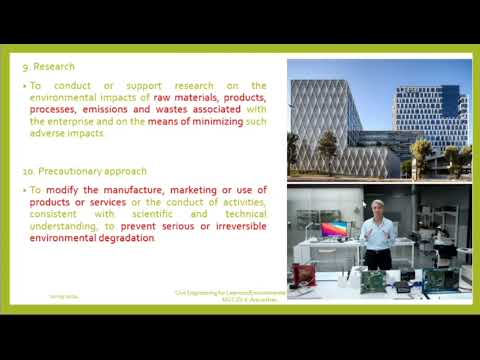
Every organization should have a dedicated research center to evaluate the environmental impact of their products. This includes assessing raw materials, production processes, emissions, and waste management. Research is critical to ensuring that new products meet sustainability standards before they reach the market.
A precautionary approach is vital, especially in industries dealing with hazardous materials. For instance, transporting petroleum products requires strict safety measures to prevent accidents. Organizations must develop protocols to ensure safety during transportation and handling of potentially dangerous substances.
It is not only the manufacturers who need to be educated about sustainable practices; contractors and suppliers must also be informed. This ensures that all parties involved in the production process adhere to the same environmental standards, promoting consistency and accountability.
Organizations must have emergency preparedness plans in place to address potential environmental hazards. This is particularly relevant in industries like oil and gas, where spills or leaks can have devastating effects on the environment.
The transfer of sustainable technology is essential for promoting eco-friendly practices. Organizations should adopt and implement technologies that minimize environmental impact, such as renewable energy sources and smart applications for sustainable travel.
Every organization should contribute to collective efforts aimed at environmental protection. This involves collaboration between consumers, organizations, and governments to create policies that support sustainability.
Organizations must be open to addressing potential hazards associated with their products. The Bhopal gas tragedy serves as a stark reminder of the consequences of negligence. Companies should be willing to listen to concerns and take responsibility for their actions.
Finally, organizations should establish mechanisms for compliance and reporting. This includes creating channels for feedback and complaints, ensuring that consumers can voice their concerns about products and practices.
The Business Charter for Sustainable Production and Consumption is a comprehensive framework that outlines essential principles for organizations to follow in order to minimize their environmental impact. By prioritizing environmental management, continuous improvement, employee education, and community engagement, companies can contribute to a more sustainable future. Adopting these principles not only benefits the environment but also enhances corporate reputation and consumer trust, ultimately leading to long-term success in the marketplace.



















