
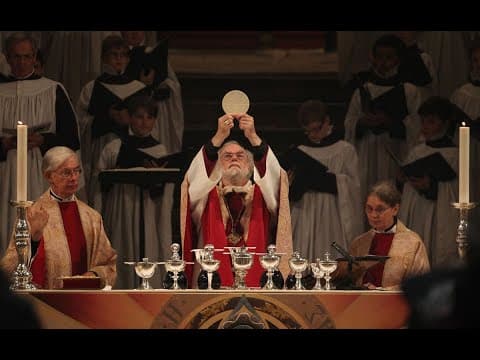
The Catholic Church does not recognize the Anglican Eucharist as valid due to differences in apostolic succession, ordination rites, and sacramental theology. The 1896 papal declaration by Pope Leo XIII concluded Anglican orders were null, impacting the recognition of Anglican priests and their Eucharistic celebrations. This theological distinction centers on the nature of priesthood, the Eucharist as a true sacrifice, and the importance of apostolic succession.
The question of whether the Anglican Eucharist is valid in the eyes of the Catholic Church touches on fundamental aspects of Christian identity and worship. The Eucharist holds a central place in Christian life as a true encounter with Christ. For Catholics, the validity of a sacrament depends on it being performed with the correct form, matter, intention, and under the proper authority. This article explores the Catholic perspective on the Anglican Eucharist, focusing on apostolic succession, ordination rites, and sacramental theology.
Apostolic succession is the belief that Christ's authority was handed down from the apostles through an unbroken line of bishops. For the Catholic Church, this succession is not merely a tradition but a guarantee that the Church remains as Christ founded it. It is essential for the validity of sacraments, especially the Eucharist and holy orders.
The priest acts in the person of Christ, empowered by a bishop within this unbroken line of succession. When the Church of England broke from Rome during the English Reformation, it retained bishops but altered the ordination rite, introducing the Edwardine Ordinal. This change raised questions about whether apostolic succession was preserved.
Did the new ordination rite create priests in the Catholic understanding, or did it establish a new kind of ministry? This question prompted a major papal investigation that would influence Catholic-Anglican relations for generations.
After thorough investigation, Pope Leo XIII issued a document in 1896 declaring Anglican orders "absolutely null and utterly void." The primary reason was that the Anglican ordination rite had changed both the words and the intention, notably omitting the sacrificial nature of the priesthood.
Without the correct form and intention, the Catholic Church judged that apostolic succession was broken. Consequently, Anglican priests seeking to become Catholic priests must be ordained anew. Although this decision was painful, it clarified the Catholic position on Anglican orders and the Eucharist.
For Catholics, a valid Eucharist requires three essential elements:
Only a validly ordained priest in apostolic succession can consecrate the Eucharist. The words spoken during the consecration are not merely symbolic; they effect a real change, known as transubstantiation, where the bread and wine become the actual body and blood of Christ.
A layperson or someone not validly ordained cannot perform this sacrament. The power to consecrate comes from the Church, not the individual.
Because the Catholic Church judged Anglican ordinations invalid, it holds that Anglican priests lack the authority to consecrate the Eucharist. Even though the Anglican liturgy may look similar to the Catholic Mass—with altars, vestments, prayers, and holy communion—the essential link of valid holy orders is missing.
Therefore, the Anglican Eucharist is not considered valid by Catholic standards.
This issue is rooted in sacramental theology rather than personal faith or devotion. The key differences include:
Visually, a high church Anglican service and a Catholic Mass can appear almost identical, reflecting reverence and beauty in worship. However, the theological understanding of what occurs during the Eucharist differs significantly.
The Catholic Church's position on the invalidity of the Anglican Eucharist is based on apostolic succession, the nature of priesthood, and sacramental theology. While this stance marks a clear theological distinction, it is not a condemnation of personal faith or devotion within Anglicanism.
There remains hope for greater unity between the Catholic and Anglican traditions through ongoing dialogue and mutual understanding. Recognizing these differences is a step toward deeper ecumenical relationships and shared Christian witness.
Understanding these complex theological and historical issues helps clarify why the Catholic Church does not recognize the Anglican Eucharist as valid, emphasizing the importance of apostolic succession and the sacramental nature of the priesthood and Eucharist in Catholic belief.



















