
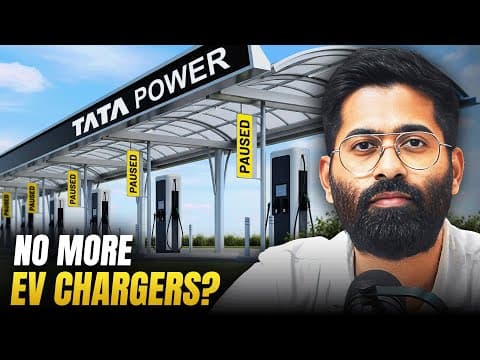
India's EV charging infrastructure is underutilized, with Tata Power pausing expansion plans due to low usage rates. This blog explores the current state of India's EV industry, the challenges it faces, and recommendations for improvement based on a recent NITI Aayog report.
India's electric vehicle (EV) charging infrastructure is facing significant challenges, leading to underutilization and stalled expansion plans. Tata Power recently announced a pause in its EV charging station expansion, which was initially set to reach 25,000 stations by the financial year 2028. Currently, the company operates 5,500 charging stations, but their utilization rate is alarmingly low, at less than 5%. This situation raises critical questions about the state of the EV industry in India, the challenges it faces, and potential solutions.
Tata Power's situation is not an isolated case; it reflects a broader issue within the Indian EV industry. As of now, there are over 26,000 public EV charging stations across India, yet their capacity utilization hovers around 4-5%. Most charging stations are used for only about two hours in a 24-hour period. Despite this underutilization, the Indian government plans to add 72,000 new chargers by 2026 under the PM e-Drive scheme. This raises the question: will these additional chargers simply go to waste?
To understand the potential for EV growth, we must look at sales figures. In 2016, India sold 50,000 EV units, and this number is projected to rise to 2.08 million by 2024. In contrast, global EV sales surged from 98,000 to 18.78 million during the same period. Although India is the third-largest automotive market globally, it contributes only 11% to global EV sales.
The penetration rate of EVs in India is also concerning. While the global average is 16.48%, India's rate stands at just 7.66%, significantly lagging behind the government's target of 30% by 2030. In 2020, India's EV penetration was 20% of the global average, and by 2024, it is expected to reach only 40% of that average.
The challenges facing India's EV industry are multifaceted and include:
The current EV-to-charging station ratio in India is 14:1, meaning that each charging station serves 14 vehicles. While this is better than Norway's ratio of 25 cars per station, Norway boasts an EV penetration rate of 93%. This disparity indicates that merely developing charging infrastructure will not drive EV demand.
India's EV market shows uneven growth across different segments. For instance, electric three-wheelers have a penetration rate of 16%, while electric two-wheelers and buses stand at 5% and 7%, respectively. However, the penetration of electric cars is notably weak, at just 2%, and long-haul electric trucks are at a mere 0.07%.
The charging infrastructure suffers from a lack of standardization, particularly for two-wheelers, which often use proprietary connectors. This inconsistency hampers the development of a uniform charging network, limiting the growth of the fastest-growing EV category in India.
India's EV charging infrastructure lacks smart features such as real-time monitoring and predictive maintenance capabilities. Most charging stations are merely large plug points without advanced functionalities, leading to low utilization rates and poor user experiences.
Low utilization rates also result in maintenance challenges. Operators often invest less in maintaining charging stations due to reduced revenues, leading to frequent breakdowns and further discouraging EV owners from using public charging stations.
The cost of using public charging stations can be four times higher than home charging due to factors like GST, operator margins, and lack of subsidies. This financial burden drives consumers to prefer home charging, further reducing the utilization of public infrastructure.
To address these challenges, NITI Aayog has proposed several recommendations:
The previous approach to increasing EV penetration relied heavily on incentives without regulatory push. NITI Aayog suggests that the government should focus on regulations and mandates to promote EV adoption, similar to the CNG mandate for public transport in Delhi in the early 2000s.
The high cost of EVs is a significant barrier to adoption, especially for small operators. A collective fund could be established to provide loans at lower interest rates for purchasing electric buses and trucks. Additionally, shifting focus from capital cost subsidies to operational cost subsidies could help ease the financial burden on operators.
Given the uneven distribution of EV penetration across segments, tailored solutions are necessary. For example, electric two-wheelers, which constitute 75% of India's vehicle fleet, require home charging solutions and standardized charging infrastructure. Public charging should focus on buses and trucks, which contribute significantly to emissions.
The challenges facing India's EV charging infrastructure are significant, but with strategic shifts, improved financing frameworks, and targeted sectoral focus, there is potential for growth. Learning from international markets that have successfully adopted EVs can provide valuable insights for India. The future of India's EV industry depends on addressing these challenges effectively and creating a robust ecosystem for electric vehicles.
What are your thoughts on India's electric vehicle, battery, and charging industries? Should we adopt foreign regulations, or is there a need for a custom EV plan tailored to India's unique context? Share your views in the comments below.



















