
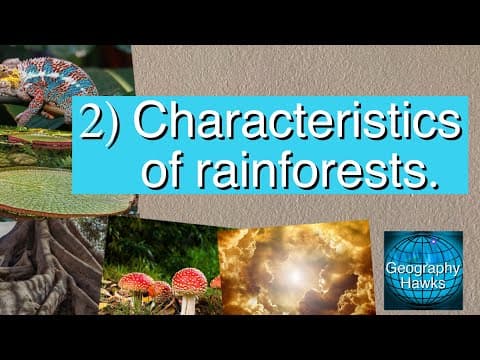
Tropical rainforests are unique ecosystems characterized by high rainfall, warm temperatures, and incredible biodiversity. They play a crucial role in nutrient cycling and are sensitive to environmental changes, making them vital to global ecology.
Tropical rainforests are some of the most fascinating and complex ecosystems on our planet. They are characterized by their noisy, damp, and hot environments, often shrouded in darkness due to the dense canopy of leaves. This blog post explores the specific environmental characteristics of tropical rainforests, their climate, soil composition, biodiversity, and the delicate balance that sustains them.
Tropical rainforests are predominantly found in the tropics, specifically in regions of Central and South America, Central Africa, Southeast Asia, and Northern Australia. These areas are known for their unique climatic conditions that support the growth of lush vegetation.
The climate is a major driving factor in the location of tropical rainforests. These forests thrive in warm and wet conditions, receiving more than 2,000 millimeters of rainfall annually, with average temperatures around 27 degrees Celsius. The temperature in these regions remains relatively stable, as the sun is positioned overhead for much of the year.
Rainfall is abundant due to the formation of low-pressure belts in equatorial regions. Warm, moist air rises rapidly, leading to the formation of clouds and heavy precipitation. There is a distinct wet season when atmospheric circulation brings low pressure directly above the forest, resulting in increased rainfall.
Contrary to what one might expect, the soils in tropical rainforests are not particularly nutrient-rich. Most nutrients are concentrated at the surface, where dead and decaying plants and animals decompose rapidly in the hot, humid environment. The trees in these forests have shallow root systems that allow them to absorb these nutrients efficiently.
This nutrient cycling is crucial for the forest's health. However, when tree cover is reduced, heavy tropical rains can lead to soil erosion, a process known as leaching, which removes essential nutrients from the soil.
Tropical rainforests boast an astonishing array of plant and animal species, housing more than half of the Earth's biodiversity despite covering only about seven percent of the planet's land surface. This incredible biodiversity is a result of the unique adaptations of plants and animals to the rainforest environment.
Plants in tropical rainforests have evolved various adaptations to thrive in their environment. Trees grow rapidly to great heights to reach sunlight, with the tallest trees known as emergents breaking through the dense canopy. The canopy itself is a layer of overlapping leaves and branches where most rainforest species reside.
Trees typically have straight and smooth trunks, which facilitate fast growth and allow water to flow down easily. Their leaves often feature drip tips, which help rainwater run off efficiently. Additionally, epiphytes are plants that live on the branches of trees, drawing nutrients from the moisture in the air, while lianas are climbing plants that use trees for support as they reach for the canopy.
The rainforest floor is often dark due to the thick canopy above, creating ideal conditions for decomposers like fungi. Both plant and animal matter decompose quickly in this environment, returning nutrients to the soil and sustaining the ecosystem.
Tropical rainforests represent delicate ecosystems where the relationship between biotic (living) and abiotic (non-living) components is fragile. Small changes, such as deforestation, can have significant and far-reaching effects on both local and global scales. The loss of tree cover not only disrupts the nutrient cycling process but also threatens the vast biodiversity that these forests support.
In summary, tropical rainforests are remarkable ecosystems characterized by their unique climate, soil composition, and incredible biodiversity. Understanding these characteristics is essential for appreciating the vital role that tropical rainforests play in our global ecology. Protecting these delicate environments is crucial, as they are not only home to countless species but also integral to the health of our planet.



















