
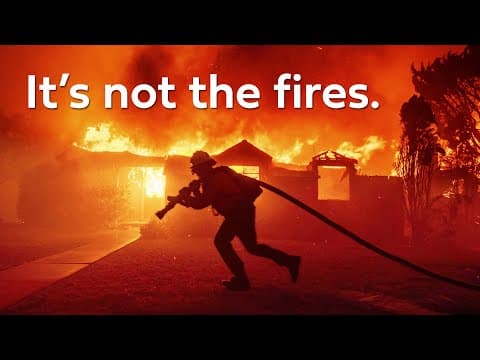
The recent fires in Los Angeles have displaced thousands and caused significant damage, raising questions about their causes. While climate change plays a role, local factors such as human infrastructure and fire management also contribute. The narrative surrounding these fires highlights the challenges of communicating complex climate issues in a simplified media landscape.
Los Angeles is currently facing devastating wildfires, with reports indicating that 180,000 people have been displaced and 12,000 buildings damaged or destroyed. Tragically, two dozen lives have been lost, and the financial toll is expected to exceed $1 billion, potentially marking this as the most expensive fire in Los Angeles history. As a climate communicator, one might expect a straightforward narrative linking these fires to climate change, but the reality is far more complex.
California is no stranger to wildfires, experiencing thousands each year. However, the recent fires have raised questions about why they are so much worse than previous incidents. Two primary narratives have emerged: 1) the fires are a direct result of climate change, and 2) they stem from political incompetence, such as budget cuts to fire departments.
Interestingly, while the total area burned by wildfires globally has decreased over the past two decades, California has seen an increase in wildfire activity. A 2017 study utilizing satellite data indicated a global decline in burn area, while California's statistics show a significant upward trend since 1987. A basic statistical analysis confirms that the acres burned in California have indeed increased over time.
However, attributing California's wildfire increase solely to climate change overlooks other critical factors. For instance, the global decrease in wildfire area is partly due to agricultural expansion, which replaces flammable land with less combustible crops. In contrast, California's situation is influenced by local conditions, including forestry management and urban development.
A 2021 study found that two-thirds of the recent increase in wildfire activity in the Western United States can be attributed to anthropogenic climate change, with the remainder due to natural variability. This suggests that while climate change is a significant factor, it is not the sole cause of the current fires.
Several specific conditions have exacerbated the LA fires:
The discourse surrounding the LA fires often simplifies the complex interplay of factors involved. Some narratives focus solely on climate change, while others emphasize local political failures. This reductionist approach can obscure the multifaceted nature of the crisis.
Media coverage has notably highlighted the losses of wealthy celebrities, which can create a misleading perception of the disaster's impact. While it is true that many affluent individuals have lost homes, tens of thousands of ordinary people, particularly low-income families, have also been severely affected. Unlike celebrities, these families may lack the resources to recover, especially if insurance claims are insufficient due to the scale of the disaster.
The financial implications of the LA fires extend beyond immediate damages. JP Morgan estimates that insured losses could exceed $2 billion, and many private insurers are withdrawing from high-risk areas due to climate change. This trend could lead to a broader insurance crisis, rendering properties unsellable and triggering a financial collapse similar to the 2008 housing crisis.
The way information is shared, particularly on social media, favors simplistic narratives over complex truths. This dynamic can hinder effective communication about climate change and its impacts, allowing misinformation to flourish. As climate-related disasters become more frequent, the challenge of accurately conveying their causes and consequences will only grow.
The LA fires serve as a microcosm of the broader climate crisis, illustrating how complex narratives are often oversimplified in public discourse. While climate change is a significant factor, local human actions and infrastructure also play crucial roles. As we move forward, it is essential to recognize the multifaceted nature of these disasters and advocate for better communication strategies that reflect the complexity of climate issues. The future of our communities and the environment depends on our ability to engage with these challenges thoughtfully and comprehensively.



















