This article explores the multifaceted impacts of unemployment, detailing both its significant costs, such as lost output and increased social issues, and its potential benefits, including a larger labor pool for employers and lower inflation. It emphasizes the importance of the unemployment rate and duration, particularly the dangers of long-term unemployment and youth unemployment.
Unemployment is a critical economic issue that affects individuals, families, and society as a whole. While the macroeconomic objective is to achieve low unemployment or full employment, high unemployment rates can lead to significant costs that often outweigh any potential benefits. This article delves into both sides of the unemployment debate, examining the costs associated with unemployment and the benefits that may arise in certain contexts.
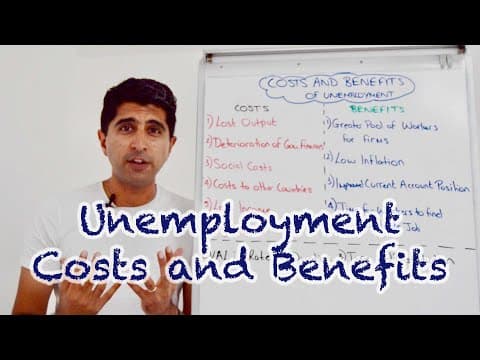
One of the primary costs of unemployment is lost output. When labor is unemployed, the economy operates below its productive potential, which means that the maximum production of goods and services is not being realized. This situation negatively impacts consumers and households, as their access to goods and services diminishes, leading to lower living standards and constraining economic growth.
High unemployment also significantly affects government finances. With fewer people employed, income tax revenues decline, and value-added tax (VAT) revenues decrease due to reduced consumer spending. Additionally, firms experience lower profits, resulting in decreased corporation tax revenue. On the spending side, governments face increased expenditures on unemployment benefits and social services to address the consequences of high unemployment, such as increased crime and social unrest.
The social implications of unemployment are profound. High unemployment rates can lead to:
These social costs create a burden on government finances, leading to budget deficits and rising national debt. This situation may force governments to raise taxes or cut spending in other areas, further impacting the economy.
For individuals, unemployment results in a loss of income, which can drive them into relative or absolute poverty. This financial strain can lead to mental health issues, such as anxiety and depression, and contribute to family discord and breakdowns. Additionally, prolonged unemployment can lead to increased borrowing, raising the risk of bankruptcy and homelessness.
One of the most concerning aspects of unemployment is the phenomenon known as hysteresis. This occurs when unemployment becomes long-term, leading to deskilling and making workers less employable. As individuals remain unemployed for extended periods, they may lose their skills or become outdated in their field, making it difficult for them to re-enter the workforce. This long-term unemployment not only affects individual workers but also constrains overall economic growth by reducing the labor force and aggregate demand.
Despite the significant costs associated with unemployment, there are some potential benefits that can arise in certain situations.
One of the primary benefits of unemployment is the creation of a larger pool of workers for firms to choose from. Employers can select the most productive workers from this pool, which can help keep production costs low and profit margins high. This flexibility can also lead to better job placements for workers, enhancing their morale and overall job satisfaction.
High unemployment can contribute to lower inflation rates. With an abundant labor supply, workers have less bargaining power for wage increases, which helps keep production costs down and stabilizes prices for goods and services. This can be beneficial for the economy as a whole.
In economies with high unemployment, there tends to be less consumer spending, particularly on imports. This reduction in demand can help improve a country's current account position, especially if it is running a deficit.
When unemployment rates are high, the stigma associated with being unemployed diminishes. Workers may feel less pressure to rush back into work and can take the time to find a job that suits their skills and interests, potentially leading to better job matches in the long run.
The evaluation of whether unemployment is good or bad largely depends on the rate and duration of unemployment. Generally, unemployment at the natural rate is considered acceptable, as the benefits may outweigh the costs. However, when unemployment exceeds this natural rate, the costs typically outweigh the benefits.
Long-term unemployment, defined as being unemployed for a year or more, poses significant risks, including increased hysteresis and the exacerbation of other unemployment-related costs. Short-term unemployment, on the other hand, is less concerning and can even be beneficial if individuals are seeking better job opportunities.
The type of unemployment also plays a crucial role in its impact:
Youth unemployment is particularly alarming, as young individuals are more susceptible to long-term unemployment and deskilling. High rates of youth unemployment can have lasting negative effects on the economy, making it crucial to address this issue.
In summary, the costs and benefits of unemployment are complex and multifaceted. While high unemployment can lead to significant economic and social challenges, there are also potential benefits that can arise in certain contexts. Understanding these dynamics is essential for policymakers and economists as they strive to manage unemployment effectively and promote economic stability.