
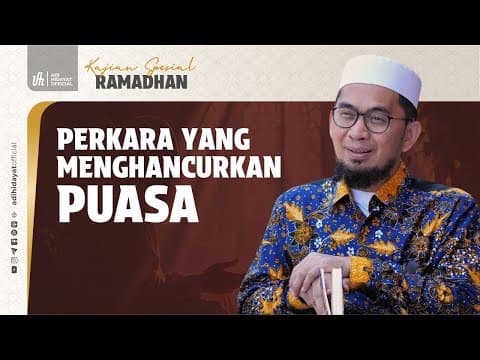
This blog post explores the critical aspects of maintaining the sanctity of fasting during Ramadan, focusing on the importance of controlling one's speech and actions to preserve the spiritual benefits of the fast, as discussed by Ustadz Adi Hidayat.
In the spirit of Ramadan, a time for reflection and spiritual growth, it is essential to understand the practices that can undermine our fasting. Ustadz Adi Hidayat emphasizes the importance of maintaining our spiritual integrity during this holy month, particularly through the control of our speech and actions.
As we gather for the morning study session after Subuh prayers, it is vital to remember those in our community who are facing challenges, such as the recent floods affecting Jabodetabek and Bekasi. We are encouraged to support one another through prayers and actions, fostering a sense of unity and compassion.
Today's discussion will focus on the topic of fasting as outlined in Sahih Al-Bukhari, specifically the 30th topic concerning fasting, which includes 69 subtopics and 121 hadiths. This structured approach will help us better understand the practices and guidelines for Ramadan, ensuring we align our actions with the teachings of the Prophet Muhammad (peace be upon him).
Fasting during Ramadan is not merely about abstaining from food and drink from dawn until sunset; it encompasses a broader spiritual discipline. This includes refraining from negative behaviors that can diminish the value of our fast. Ustadz Adi Hidayat highlights that while we may physically fast, we must also guard against actions that can destroy the spiritual rewards of our fasting.
One of the most critical aspects of maintaining the sanctity of our fast is controlling our speech. The Prophet Muhammad (peace be upon him) warned against engaging in inappropriate or harmful speech, which can invalidate the essence of fasting. This includes:
These actions not only harm our spiritual state but can also lead to a loss of respect and honor, both for ourselves and others. The Quran and Hadith emphasize the importance of guarding our tongues, especially during Ramadan, as it is a time for spiritual refinement.
Ustadz Adi Hidayat references a hadith narrated by Abu Hurairah (may Allah be pleased with him), where the Prophet Muhammad (peace be upon him) stated: "Whoever does not abandon false speech and acting upon it, Allah has no need for him to abandon his food and drink." This hadith underscores the gravity of maintaining integrity in our speech during fasting.
Failing to control our speech can lead to severe consequences, not just in terms of spiritual rewards but also in our social interactions. Words have the power to uplift or destroy, and careless speech can lead to misunderstandings, conflicts, and a breakdown of relationships. Ustadz Adi Hidayat emphasizes that the tongue is a powerful tool that must be managed wisely.
As we navigate through Ramadan, let us commit to not only fasting from food and drink but also from harmful speech and actions. By doing so, we can ensure that our fasting is meaningful and spiritually rewarding. The teachings of the Prophet Muhammad (peace be upon him) serve as a guide for us to cultivate a more profound sense of discipline and respect for ourselves and others during this holy month. May Allah grant us the strength to uphold these values and accept our fasts.



















