
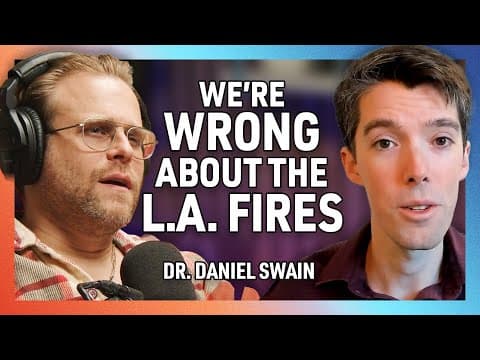
The recent wildfires in Los Angeles have caused unprecedented destruction, fueled by extreme weather conditions and climate change. Dr. Daniel Swain explains the science behind these disasters, the challenges faced by firefighters, and the importance of addressing climate resilience and preparedness in the face of future risks.
In recent weeks, Los Angeles has faced catastrophic wildfires that have devastated vast areas, leaving thousands homeless and claiming lives. With nearly 40,000 acres burned and 880,000 people under evacuation orders, the scale of this disaster is reminiscent of past tragedies like Hurricane Katrina. Amidst the chaos, misinformation has spread about the causes and responses to these fires. To clarify the situation, Adam Conover speaks with Dr. Daniel Swain, a climate scientist at UCLA, who specializes in the intersection of climate change and wildfire disasters.
The wildfires have resulted in significant destruction, with entire neighborhoods in cities like Pacific Palisades and Altadena effectively leveled. As of the recording, 24 lives have been lost, and that number may rise. The devastation has sparked anger and confusion among residents, who are desperate for answers about the causes of the fires and the effectiveness of the firefighting response.
In the wake of the fires, numerous rumors have circulated, including claims about budget cuts to firefighting services and even allegations of arson. One particularly absurd claim suggested that an endangered fish was responsible for water shortages in firefighting efforts, despite reservoirs being fuller than they had been in years. Dr. Swain emphasizes the importance of cutting through this misinformation to understand the true causes of the fires.
Dr. Swain explains that while strong winds are common during this time of year, the unprecedented dryness leading up to the fires was a critical factor. Southern California experienced a significant dry spell, with virtually no rain since May, creating ideal conditions for wildfires. This dry period followed two years of exceptionally wet winters, which led to an overgrowth of vegetation that became highly flammable.
The recent wildfires are not just a result of natural weather patterns but are also exacerbated by climate change. Dr. Swain notes that the increasing variability in weather patterns, including the transition from wet to dry conditions, is a hallmark of a warming climate. This variability contributes to the growth of vegetation that can fuel wildfires, making them more intense and harder to control.
The conditions on the ground during the fires were dire. Dr. Swain describes the situation as an "ember storm," where billions of embers were blown by extreme winds, igniting new fires across urban areas. Firefighters faced overwhelming challenges, including high winds that made aerial firefighting impossible and the rapid spread of fires from structure to structure.
Despite having a robust firefighting infrastructure, the sheer scale of the disaster outstripped available resources. Dr. Swain explains that once a few structures catch fire, the situation escalates rapidly, creating a self-reinforcing cycle of destruction. Firefighters had to make difficult decisions about where to focus their efforts, often prioritizing saving lives over property.
As the conversation shifts to the future, Dr. Swain emphasizes the need for communities to rethink their approach to rebuilding after such disasters. He advocates for fire-resilient building practices and better land management to reduce the risk of future wildfires. This includes implementing stricter building codes and vegetation clearance policies.
The question of whether to rebuild in high-risk areas is complex. While individuals have the right to decide where to live, there is a broader policy discussion about whether government resources should support rebuilding in areas prone to wildfires. Dr. Swain suggests that some areas may need to be re-evaluated for their long-term viability as residential zones.
The recent wildfires in Los Angeles serve as a stark reminder of the growing risks posed by climate change and the need for proactive measures to enhance community resilience. While the immediate focus may be on recovery and rebuilding, it is crucial to address the underlying factors that contribute to such disasters. By fostering a culture of preparedness and resilience, communities can better navigate the challenges posed by an increasingly volatile climate.
Dr. Swain's insights highlight the importance of understanding the science behind these events and the need for informed discussions about how to mitigate future risks. As we move forward, it is essential to prioritize strategies that enhance fire resilience and address the broader implications of climate change on our communities.



















