
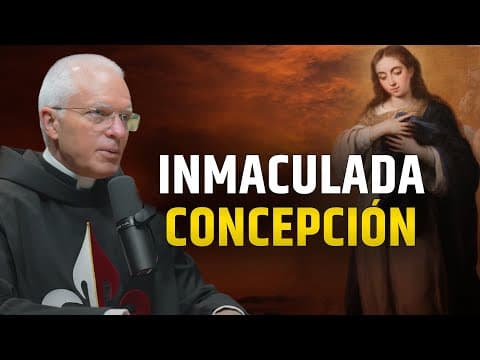
This article explores the Catholic dogma of the Immaculate Conception, explaining its origins, theological debates, and significance. It highlights how the Virgin Mary was conceived without original sin as a unique grace from God, supported by early Church observations and theological reasoning, emphasizing the importance of Marian devotion in growing closer to Jesus Christ.
The dogma of the Immaculate Conception is one of the four dogmas declared by the Catholic Church concerning the Virgin Mary. It teaches that Mary, the mother of Jesus, was conceived without original sin. This extraordinary gift from God highlights her unique role and purity in salvation history.
In this article, we delve into the origins, theological foundations, and spiritual significance of this dogma, drawing insights from Father Ricardo Juke and reflections from Catholic tradition.
The Immaculate Conception means that from the very first moment of her existence, Mary was preserved free from original sin. This privilege was granted by God to prepare her to be the pure and holy mother of Jesus Christ.
Some contemporary Catholic circles question the emphasis on Marian devotion, fearing it might overshadow devotion to Jesus Christ. However, growing in love and devotion to the Virgin Mary actually deepens one’s love for Jesus, as Mary always points to her Son.
From the earliest days of Christianity, the apostles and early Christians recognized Mary as an exceptionally holy person. They witnessed her "dormition" or peaceful passing, noting that her body did not undergo corruption, a sign of her unique sanctity.
Mary did not die from illness or decay but simply because the grace within her could no longer be contained. This observation led to a devotional understanding of her exceptional purity.
Despite early veneration, the dogma was subject to theological debate. Some questioned how Mary could be free from original sin if Jesus’ redemptive sacrifice on the cross occurred after her conception.
This led to discussions about the timing and application of Christ’s redemption and how it could apply to Mary from the moment of her conception.
In the 13th century, scholastic theology, especially through the work of Saint Thomas Aquinas and the Franciscan order, provided strong arguments supporting the dogma.
The Franciscan theologian Blessed John Duns Scotus, known as the "Doctor of the Immaculate," famously summarized the reasoning with the phrase:
"Potuit, decuit, ergo fecit" (He could, He ought to, therefore He did).
This means that God, being omnipotent, could preserve Mary from sin, it was fitting that He did so, and therefore He actually did.
The logic follows that if God wanted Mary to be immaculate and could do so, He would have done it. If He could but did not, He would not be omnipotent; if He wanted but could not, He would not be God; and if He could and wanted but did not, Jesus would not be truly His Son.
Thus, the dogma reflects a divine order and logic: Jesus, being God and man, would have a mother free from original sin.
The dogma is celebrated in prayers and liturgies, such as the Litany of the Blessed Virgin Mary, which includes the invocation:
"Mary, conceived without sin, pray for us."
Catholics are encouraged to deepen their devotion to Mary, understanding that honoring her leads to a closer relationship with Jesus Christ.
The dogma of the Immaculate Conception is a profound teaching that highlights Mary’s unique role in salvation history. It is rooted in early Church tradition, theological reflection, and divine logic.
Far from detracting from Christ, devotion to Mary enriches the Catholic faith and draws believers closer to the heart of Jesus. Recognizing Mary as conceived without original sin honors the divine plan and the holiness bestowed upon her by God.
May this understanding inspire greater love and devotion in the hearts of the faithful.



















