
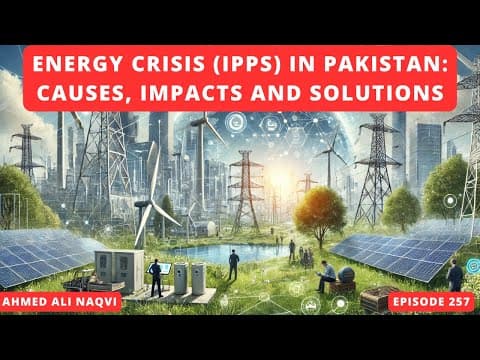
This blog post explores the energy crisis in Pakistan, examining its historical roots, current challenges, and potential solutions. It highlights the role of Independent Power Producers (IPPs), pricing issues, infrastructure problems, and the need for investment in renewable energy.
The energy crisis in Pakistan has become a pressing issue, significantly impacting the country's economy and daily life. In this blog post, we will delve into the historical landscape of energy in Pakistan, analyze the current crisis, and discuss potential solutions moving forward.
Pakistan has faced energy challenges for decades. The initial focus on hydroelectric power began in the 1960s with the establishment of various projects aimed at generating electricity to support industrial growth. However, the nationalization in the 1970s halted industrial expansion and reduced energy demand. By the 1980s, energy production was neglected, leading to a severe crisis in the 1990s when the country struggled to meet its energy needs.
In 1994, the government introduced policies to invite Independent Power Producers (IPPs) to invest in the energy sector, which provided a temporary boost to energy production and economic stability. However, post-Musharraf, the focus shifted towards economic revival, neglecting the necessary energy infrastructure to support industrial growth. This neglect resulted in severe load shedding and protests across various cities starting in 2006.
Today, the energy crisis in Pakistan is characterized by several critical issues:
Pakistan has one of the highest energy prices in South Asia, with average tariffs exceeding 60 PKR per unit for commercial users and just below 50 PKR for domestic users. These high prices not only burden consumers but also deter foreign investment, further exacerbating the economic crisis.
Line losses in the distribution network are alarmingly high, often exceeding 30%. This inefficiency is attributed to energy theft and outdated infrastructure, which significantly increases costs for consumers and contributes to the circular debt problem.
The energy infrastructure in Pakistan is outdated, relying on old technologies that increase production costs. This inefficiency is a major contributor to the rising energy prices faced by consumers.
Pakistan's energy mix is heavily reliant on fossil fuels, which have become increasingly expensive due to international market fluctuations. The slow transition to renewable energy sources has left the country vulnerable to external shocks.
Despite having installed capacity of 42,000 MW, Pakistan experiences frequent load shedding due to the inability of the government to sell the produced energy to consumers. This situation is exacerbated by high energy prices and the inability of consumers to pay their bills.
IPPs have been a significant part of Pakistan's energy landscape. The agreements made with IPPs often include capacity payments, which the government is obligated to fulfill regardless of actual energy consumption. This creates a financial burden on the government, leading to increased tariffs for consumers. The government’s inability to sell energy effectively results in a gap between production and consumption, further complicating the crisis.
To address the energy crisis, several measures can be taken:
Privatizing distribution companies could alleviate the burden of capacity payments on the government. A private sector model would allow for more efficient management and direct sales to consumers, reducing the need for government intervention.
A significant shift towards renewable energy sources is essential for long-term sustainability. Investment in solar, wind, and hydropower can reduce dependence on fossil fuels and lower overall energy costs.
Addressing corruption and improving management within energy companies is crucial. A transparent regulatory framework can enhance efficiency and accountability in the energy sector.
Encouraging foreign direct investment in the energy sector can bring in much-needed capital and expertise. This investment should focus on production, transmission, and infrastructure improvements.
The energy crisis in Pakistan is a multifaceted issue that significantly contributes to the country's economic challenges. High energy costs, inefficiencies in the distribution network, and a heavy reliance on fossil fuels are critical factors that need to be addressed. By focusing on privatization, renewable energy investment, and improved management, Pakistan can work towards a more sustainable and efficient energy future.



















