
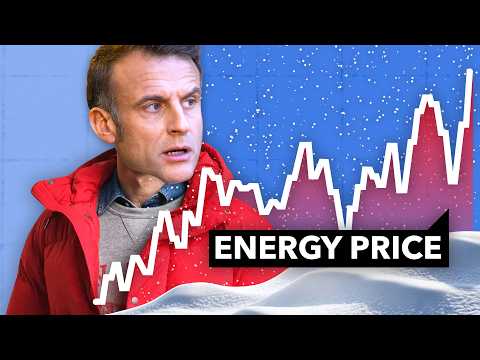
Europe is facing a worsening energy crisis due to rising prices, depleting gas reserves, and insufficient energy production, particularly in Germany. The situation is exacerbated by a cold winter and the expiration of a gas transit agreement with Russia, leading to economic and political challenges across the continent.
The energy crisis in Europe has taken a turn for the worse as the continent grapples with rising prices and dwindling gas reserves. Following Russia's invasion of Ukraine in early 2022, Europe initially managed to avoid a severe energy shock. However, as winter approaches, the situation has become increasingly dire. This article explores the reasons behind the rising energy prices, the implications for Europe, and potential solutions to mitigate the crisis.
Since the onset of the conflict in Ukraine, energy prices in Europe have remained significantly higher than pre-2022 levels. In Germany, for instance, wholesale electricity prices have averaged €1,138 per megawatt hour since March 2022, representing a staggering 280% increase compared to the period between 2016 and 2019. Other countries have also seen dramatic price hikes:
As of November, average wholesale electricity prices in these countries reached their highest levels in at least 20 months. In Germany, prices soared to €1,000 per megawatt hour in early December, marking the highest price recorded in 18 years. While these figures are lower than the peak prices of 2022, they still indicate a troubling trend for Europe's energy landscape.
Several factors have contributed to the recent surge in energy prices across Europe:
Germany, Europe's largest economy, has experienced a prolonged period of cloudy and windless weather this autumn and winter. This has resulted in a significant reduction in renewable energy output, particularly from wind and solar sources. Consequently, Germany has had to rely more heavily on alternative electricity sources, which has proven challenging due to its previous dependence on cheap Russian gas.
The German government, led by Chancellor Olaf Scholz, has phased out nuclear energy, shutting down its last nuclear power plant in 2023. Additionally, Germany lacks substantial domestic natural gas production and has been transitioning away from coal in line with the EU's green energy goals. As a result, Germany has increasingly turned to imports for its electricity needs. In 2023, for the first time in two decades, Germany imported more electricity than it exported.
Germany's reliance on gas imports, particularly from Norway, has led to soaring energy prices in that country, reaching levels not seen since 2009. Norway accounted for 43% of Germany's gas imports last year. The Swedish Energy Minister has pointed to Germany's nuclear phase-out as a key factor in rising prices, suggesting that more nuclear energy production could help stabilize the European energy market.
This winter has been notably colder than the previous two winters, leading to increased heating demands across Europe. While European gas storage levels were higher than average for most of the year, they have recently fallen sharply by 15%. Current storage levels are around 80% capacity, but projections indicate that this could drop to just 33% by the end of March, raising concerns about replenishing gas reserves for the next winter.
Another significant factor is the expiration of a gas transit agreement between Ukraine and Russia. This deal, signed in 2019, allowed Russian gas to flow through Ukraine into the EU. Despite a commitment from the EU to reduce reliance on Russian gas by 2027, several member states, including Slovakia, Hungary, and Austria, have continued to depend on this supply. The loss of this gas will likely lead to further price increases across Europe, with Slovakia already declaring a state of emergency due to a gas crisis.
The rising energy prices pose serious economic challenges for Europe. The primary concern is inflation, as energy is a fundamental component of virtually all goods and services. Higher energy costs lead to increased prices for consumers, reducing purchasing power and domestic demand. This situation is particularly detrimental to energy-intensive industries, such as chemicals and steel, which are already facing record low production levels and mass layoffs.
Politically, the energy crisis threatens to undermine cooperation among European nations. The EU's common energy market, which harmonizes prices across the continent, relies on member states sharing their energy resources. However, as supplies dwindle, countries may become less willing to cooperate. For instance, Germany has faced accusations of hoarding gas supplies, and Norway is considering cutting energy links with Denmark and renegotiating connections with Germany.
To avoid a full-blown energy crisis, Europe has increased its imports of liquefied natural gas (LNG), primarily from the United States, while also receiving significant amounts from Russia. However, LNG supplies are volatile and closely tied to the global energy market. Therefore, Europe may need to invest more in its energy transition and nuclear capabilities, despite the associated costs and controversies.
As Europe heads into 2025, the energy crisis presents a complex challenge for leaders across the continent. The question remains: how will European leaders navigate this crisis, and who will emerge as the most influential figures in shaping the future of energy in Europe?



















