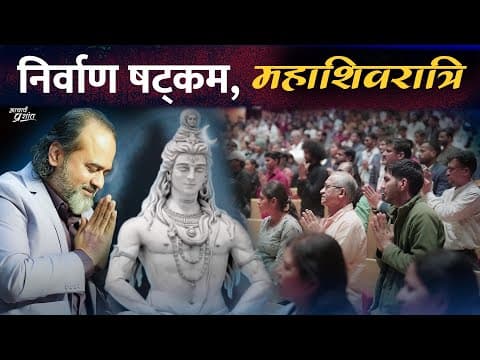
This blog post explores the significance of Mahashivaratri and the teachings of Nirvana Shatkam as articulated by Acharya Prashant. It emphasizes the importance of transcending physical limitations, the essence of true love, and the pursuit of self-realization through the rejection of ego and material distractions.
Mahashivaratri is not just a festival; it is a profound opportunity for self-reflection and spiritual awakening. In a recent discourse, Acharya Prashant elaborated on the significance of this day and the teachings encapsulated in the Nirvana Shatkam. This blog post delves into the essence of these teachings and their relevance in our lives.
Mahashivaratri is celebrated as a day of overcoming physical and worldly obstacles to connect with the higher consciousness. Acharya Prashant emphasizes that true Shivhood is not confined to a single day but is a continuous choice to transcend our limitations and embrace our true nature. The gathering of individuals from various places, including those from abroad, signifies a collective effort to rise above personal challenges and seek spiritual truth.
Nirvana Shatkam, also known as Atma Shatkam, is a profound text that outlines the path to self-realization. The first verse of this text serves as a negation of all that is not the self. Acharya Prashant explains that the essence of this teaching is to reject everything that binds us and to recognize that true freedom lies in understanding our own nature.
The initial verses of Nirvana Shatkam focus on negating the mind, intellect, ego, and sensory perceptions. Acharya Prashant urges us not to give undue importance to these aspects of our being. Instead, we should strive to connect with our pure essence, which is love and consciousness. This negation is not about denial but about recognizing what is not essential to our true self.
Acharya Prashant highlights that love, in its purest form, is devoid of desire or attachment. It is essential to cultivate a love that is selfless and rooted in the understanding of our own purity. This love should guide our actions and decisions, allowing us to navigate life with clarity and purpose. The true duty of an individual is to love oneself, which in turn enables the fulfillment of all other responsibilities.
In our pursuit of life, we often become entangled in material distractions that divert us from our true path. Acharya Prashant warns against allowing external factors, such as societal expectations or physical possessions, to dictate our sense of self-worth. He emphasizes that our focus should remain on our inner journey rather than getting lost in the allure of the external world.
Self-realization is the cornerstone of spiritual growth. Acharya Prashant asserts that understanding who we truly are is the first step towards liberation. The teachings of Nirvana Shatkam guide us to look beyond the superficial and to engage in a deeper inquiry into our existence. This journey requires courage to confront our limitations and the willingness to embrace our true nature.
The teachings of Mahashivaratri and Nirvana Shatkam remind us of the importance of transcending our limitations and embracing our true selves. Acharya Prashant's insights encourage us to cultivate a love that is pure and selfless, guiding us on our spiritual journey. As we celebrate Mahashivaratri, let us commit to overcoming our obstacles and seeking the truth within ourselves, for that is the essence of Shivhood.