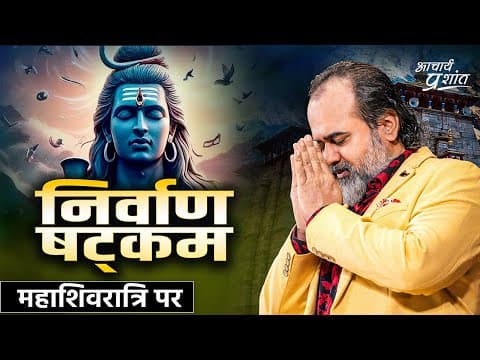
This blog post explores the profound teachings of Mahashivaratri as articulated by Acharya Prashant, emphasizing the significance of transcending physical limitations and embracing the essence of Shiva through self-love and purity.
Mahashivaratri is not just a festival; it is a profound opportunity for introspection and spiritual awakening. Acharya Prashant, in his discourse, emphasizes the importance of this day, not merely as a ritualistic observance but as a moment to transcend physical and worldly limitations in pursuit of higher consciousness.
Acharya Prashant expresses heartfelt gratitude to the attendees, acknowledging their efforts to gather from various corners of the country and even from abroad. He highlights that Mahashivaratri is significant because it represents a collective decision to rise above worldly challenges and embrace the essence of consciousness, which he refers to as "Shivtatva".
The essence of Mahashivaratri lies in the realization that it is not confined to a single day. It symbolizes the choice to pursue higher consciousness despite the obstacles that life presents. The true celebration of this day is reflected in the commitment to transcend personal limitations and embrace the divine within.
Acharya Prashant delves into the teachings of Nirvana Shatkam, also known as Atma Shatkam, which serves as a guide to self-realization. The first verse of Nirvana Shatkam emphasizes negation—specifically, the negation of everything that is not the self. This process of negation is crucial for understanding what constitutes true Shiva consciousness.
In his teachings, Prashant discusses the four components of the inner self: mind, intellect, ego, and consciousness. He urges individuals not to give undue importance to these aspects, as they can often cloud the true essence of being. Instead, he advocates for a focus on purity and love, which he identifies as the core of Shivtatva.
Acharya Prashant emphasizes that love, particularly pure love, should be the primary focus of one's spiritual journey. This love is not to be confused with desire or attachment; rather, it is a deep affection for one's own purity and essence. He asserts that self-love is the foundation of all responsibilities and duties in life.
The discourse highlights that the first and foremost responsibility of an individual is towards oneself. When one fulfills this primary duty of self-love, all other responsibilities naturally fall into place. Prashant argues that neglecting this fundamental duty leads to a life filled with confusion and dissatisfaction, despite outward appearances of diligence and responsibility.
Prashant draws attention to the common human tendency to prioritize material pursuits over spiritual growth. He likens this to choosing a flashy car model without considering the destination. The model, representing superficial desires, often overshadows the true goal of life, which is spiritual fulfillment.
He warns against allowing external factors—such as societal expectations or material possessions—to dictate one's sense of self-worth. This external validation can lead to a life driven by fear and anxiety, as individuals become overly concerned with maintaining appearances rather than nurturing their inner selves.
The teachings culminate in the understanding that true Shiva consciousness is about embracing purity and love. Acharya Prashant encourages individuals to utilize their mind, intellect, ego, and consciousness as tools to enhance their spiritual journey rather than allowing these aspects to dominate their lives.
As Mahashivaratri unfolds, the message is clear: transcend the physical and embrace the spiritual. The teachings of Nirvana Shatkam serve as a reminder that the journey towards self-realization is not just about rituals but about cultivating a deep, abiding love for oneself and the divine essence within.
In conclusion, Mahashivaratri is an invitation to reflect on our inner selves, challenge our limitations, and embrace the purity of love that defines our existence. Acharya Prashant's insights provide a roadmap for navigating this journey, reminding us that the essence of Shiva is not found in external rituals but in the profound love we cultivate within ourselves.