
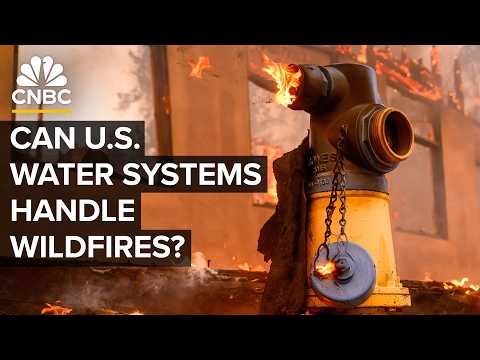
The recent wildfires in Los Angeles exposed critical failures in the city's water systems, highlighting the need for improved infrastructure and preparedness to combat increasingly severe fire events across the U.S.
As wildfires ravaged Los Angeles on January 7th, 2024, the city faced a shocking reality: fire hydrants began to run dry. This incident raised significant questions about the preparedness of urban water systems in the face of catastrophic fires, not just in California but across the United States.
The fires in Los Angeles were exacerbated by winds reaching up to 100 miles per hour, leading to rapid spread and devastation. Tragically, these fires resulted in the loss of at least 28 lives and the destruction of over 16,000 buildings. Among those affected was Joan Zoloth, who lost her family home in the Pacific Palisades, a community filled with residents who are not just celebrities but everyday people.
Zoloth's experience reflects a broader concern: if the water system in Pacific Palisades failed, how far did this issue extend? Was there enough water to combat the fires in Malibu, just six miles away?
Municipal water systems are primarily designed for everyday use, such as drinking and sanitation. They can handle a few structure fires but are not equipped to manage multiple simultaneous fires, especially in a densely populated area. During the Los Angeles fires, the demand for water from numerous fire engines overwhelmed the system, leading to a rapid depletion of available water.
Los Angeles sources its water from several distant locations, including the Owens Valley, the Colorado River, and northern California. This water is stored in various reservoirs, tanks, and underground basins before being distributed through a complex network of pipelines. In the case of the Pacific Palisades, the water supply was further complicated by a reservoir that had been closed for repairs, limiting the available resources during the crisis.
On the day of the fire, the pumps that refill the tanks could not keep up with the demand from firefighters. As the tanks emptied, the pressure in the hydrants dropped, leading to a cascading failure of the water supply system. Firefighters were forced to adapt by using water shuttles and drawing from alternative sources, such as swimming pools, to combat the flames.
California Governor Gavin Newsom and local officials have called for investigations into the failures of the water system during the fires. Questions have arisen about the impact of environmental policies, such as those protecting endangered species, on water availability. However, experts have clarified that these policies did not significantly affect firefighting efforts.
The real issue lies in the infrastructure's inability to handle the scale of the fires. Historical precedents show that hydrants running dry during large fires is not a new phenomenon. Similar challenges have been faced in other regions, including Oakland and Ventura County, where hydrants failed during significant wildfires.
The reality is that as climate change intensifies, the frequency and severity of wildfires are increasing. Currently, one in six Americans lives in areas with significant wildfire risk. The traditional wildfire season is becoming less defined, with fires occurring year-round.
To mitigate the risks associated with wildfires, communities must develop comprehensive wildfire action plans. This includes hardening homes against fires, maintaining defensible spaces, and ensuring that local water systems are resilient enough to handle emergencies.
Innovative solutions are being explored, such as the Heli-hydrant system developed by retired LA County Battalion Chief Mark Whaling. This system provides a reliable water source for helicopters fighting fires, reducing the time needed for water pickups.
The recent fires in Los Angeles serve as a wake-up call for urban water systems across the country. As communities rebuild, there is a pressing need to invest in infrastructure improvements and develop strategies to enhance water supply resilience during emergencies.
Cities like San Francisco have already implemented separate fire-suppression water systems to prevent similar failures. As the demand for water increases due to climate change and urban expansion, it is crucial for municipalities to prioritize water management and infrastructure upgrades.
In conclusion, the failures of the water system during the Los Angeles fires highlight the urgent need for comprehensive planning and investment in water infrastructure. As wildfires become an increasingly common threat, communities must be prepared to adapt and respond effectively to protect lives and property.



















