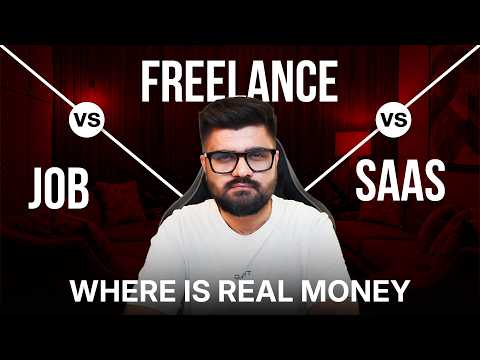
This article explores the pros and cons of traditional jobs, freelancing, and SaaS (Software as a Service) as career paths. It discusses income stability, social validation, mental peace, and limitations like capped income and office politics in jobs. The goal is to help readers think critically about their career choices based on real-world experiences.
Have you ever wondered how long you could survive financially if you suddenly lost your job or your company let you go? Would your income stop immediately, or would you have some buffer? This question is crucial when considering your career path. In this article, we will explore three major career options: traditional jobs, freelancing, and SaaS (Software as a Service).
This is not a motivational piece or a social media thread. Instead, it is a discussion based on real-world experiences, including those of the author, Manu Arora. The aim is to help you think critically about your career choices and understand the pros and cons of each path.
A job typically involves working for a company where you are hired based on your skills, such as development, design, or any other expertise. The company pays you a fixed income every month, which is a primary reason many people prefer jobs.
Fixed Income: You receive a steady paycheck every month, which helps cover your expenses and allows for some savings and investments.
Stability: Skilled professionals usually enjoy job stability. Even if laid off, a skilled individual with personal branding can find another decent-paying job relatively easily.
Social Validation: Working for reputed companies like Google, Microsoft, or Amazon brings social recognition and respect, which can positively impact your personal and professional life.
No Sales or Marketing Pressure: Unlike freelancing or running a SaaS business, you don't have to worry about acquiring clients or selling products. Your income is assured regardless of sales performance.
Mental Peace: Having a job provides a sense of security and mental peace, knowing that your monthly income is guaranteed. This can be comforting even if the job has its challenges.
Income is Capped: Your salary is fixed and usually does not increase significantly based on your performance. Even if you contribute greatly to the company, your pay might not reflect that.
Limited Promotions: Promotions and salary hikes are often limited, especially in large service-based companies, typically around 10% increments.
Office Politics: Workplace politics can affect your career growth and job satisfaction. While experiences vary, it is a reality in many organizations.
Company Performance Affects You: If the company struggles financially, you might face salary cuts, halted promotions, or layoffs.
Job Security is Uncertain: Companies can restructure or lay off employees at any time, regardless of loyalty or tenure. This uncertainty can be unsettling.
Lack of Leverage: You do not own the business or the product, so your income potential is limited to what the company offers. To increase earnings, you often need to switch jobs or upskill.
The video and discussion also cover freelancing and SaaS as alternative career paths, highlighting how they differ from traditional jobs in terms of income potential, risks, and required skills. These will be explored in detail to provide a comprehensive understanding.
Choosing between a job, freelancing, or building a SaaS business depends on your personal circumstances, skills, and risk tolerance. Jobs offer stability and mental peace but come with capped income and potential office politics. Understanding these factors can help you make an informed decision about your career path.
Remember, the goal is not to prescribe a one-size-fits-all solution but to encourage you to think critically about what suits your life and aspirations best.