
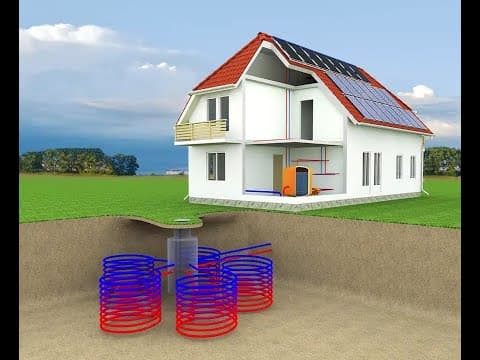
Geothermal heat pumps, while efficient, often come with high upfront costs that make them less financially viable compared to air source heat pumps for most homes. However, they can be advantageous for off-grid houses, particularly in colder climates, due to their reliability and efficiency in energy use.
Geothermal heat pumps have gained popularity as a sustainable heating and cooling solution, but their financial implications often raise questions. This article explores when geothermal systems are beneficial compared to air source heat pumps, particularly in off-grid scenarios.
When evaluating heating options for homes, air source heat pumps typically emerge as the most cost-effective solution. However, geothermal heat pumps can be more economical in specific situations, especially when significant heating is required throughout the year.
In off-grid systems, both air source and geothermal heat pumps offer advantages over traditional fuels like propane or natural gas. The primary benefit is reliability. In an ideal off-grid home, the heating system should operate autonomously for extended periods without maintenance or refueling.
Geothermal systems excel in this regard, allowing homes to function efficiently for five to ten years without intervention, making them a strong candidate for off-grid living.
Geothermal systems operate by circulating water, air, or refrigerant into the ground, where they either absorb or release heat. This process contrasts with air source heat pumps, which transfer heat between the home and the outside air using a refrigeration cycle.
One of the main reasons homeowners opt for geothermal systems is their efficiency. Geothermal heat pumps are often touted as the cheapest way to produce heat on Earth when considering long-term operational costs. However, the initial installation costs can be prohibitive, typically ranging from $20,000 to $30,000 more than air source heat pumps.
For example, a good variable speed mini-split air source heat pump may cost around $3,500 per ton, while a comparable geothermal system can range from $6,500 to $8,000 per ton. This significant price difference is a major barrier to widespread adoption.
The HVAC industry has established practices for central heat pumps, but geothermal systems lack a standardized approach. This inconsistency can lead to improper installations, which may deter potential users. The expertise required to install geothermal systems correctly is often lacking in the industry, contributing to their underutilization despite their potential benefits.
Despite the high upfront costs, geothermal systems can be advantageous in specific scenarios, particularly for off-grid homes. In colder climates, geothermal systems can outperform air source heat pumps, especially during peak heating periods.
A study comparing energy usage between geothermal systems and air source heat pumps in Winslow, Arizona, revealed that geothermal systems used approximately 40% to 45% less energy than both single-stage and variable-speed air source systems. While natural gas may offer lower costs, the long-term implications of gas prices must be considered.
The effectiveness of geothermal systems varies by climate zone. In climate zones 4 and above, geothermal systems can become more economically viable, particularly for larger systems (around 5 tons). In contrast, in climate zones 3 and below, air source heat pumps may be more efficient and cost-effective due to milder temperatures.
Innovations in geothermal technology are emerging, with companies like Dandelion Energy and others in Europe developing more efficient systems. These advancements could enhance the appeal of geothermal systems, particularly for off-grid homes seeking to minimize reliance on fossil fuels.
While geothermal heat pumps may not always be the most financially viable option for every homeowner, they offer unique advantages for off-grid living and in specific climate conditions. As technology continues to evolve, geothermal systems may become a more attractive option for those seeking sustainable and reliable heating solutions.
In summary, understanding the financial implications and operational efficiencies of geothermal heat pumps is crucial for homeowners considering their options in heating and cooling solutions.



















