
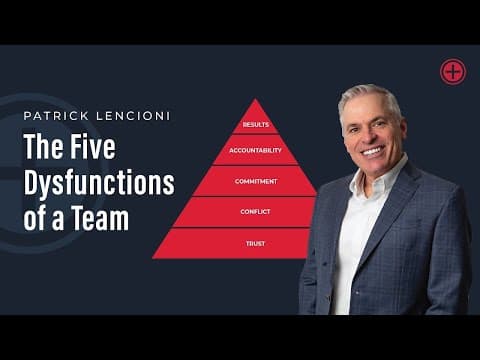
This blog post explores Patrick Lencioni's Five Dysfunctions of a Team, detailing how absence of trust, fear of conflict, lack of commitment, avoidance of accountability, and inattention to results can undermine team effectiveness. It provides insights on overcoming these dysfunctions to foster a culture of collaboration and success within teams.
In today's fast-paced work environment, the effectiveness of a team can make or break an organization. Patrick Lencioni's framework, "The Five Dysfunctions of a Team," identifies key obstacles that can hinder team performance. This post will delve into each dysfunction, explain its implications, and provide strategies for overcoming these challenges.
Lencioni categorizes the dysfunctions into five distinct areas, each building upon the previous one. Understanding these dysfunctions is crucial for any team aiming to enhance its performance.
The foundation of any successful team is trust. However, Lencioni emphasizes that the type of trust necessary for effective teamwork is not merely predictive trust, which is based on familiarity and past experiences. Instead, he advocates for vulnerability-based trust. This form of trust allows team members to be open and honest about their weaknesses, mistakes, and needs for help.
When team members can admit they don’t have all the answers or acknowledge their shortcomings, it fosters an environment where everyone feels safe to express themselves. This openness is essential for building a strong team dynamic.
Once trust is established, teams can engage in healthy conflict. Lencioni points out that many teams avoid conflict due to fear, which can lead to unproductive discussions and unresolved issues. Healthy conflict is not only acceptable but necessary for teams to explore different perspectives and arrive at the best solutions.
Conflict should be viewed as a pursuit of truth rather than a personal attack. When team members feel safe to share their opinions, even if they differ, it leads to more robust discussions and ultimately better decision-making.
Commitment arises from engaging in conflict. When team members have the opportunity to voice their opinions and concerns, they are more likely to buy into the final decision, even if it was not their initial preference. Lencioni highlights that without conflict, team members may leave meetings feeling passively committed, which can lead to a lack of support for the decisions made.
A committed team is one where all members are aligned and ready to move forward together, even if they had differing views during discussions. This commitment is crucial for the team's success.
Accountability is often the most challenging dysfunction to address. It involves team members holding each other accountable for their commitments and responsibilities. Lencioni stresses the importance of peer-to-peer accountability, where team members feel empowered to remind one another of their commitments and offer support when needed.
When accountability is present, team members can openly discuss performance issues and help each other improve, fostering a culture of mutual respect and support.
The final dysfunction is inattention to results, which occurs when team members prioritize their individual goals over the collective goals of the team. Lencioni emphasizes that successful teams focus on collective results rather than individual achievements. This means that team members are willing to sacrifice personal gains for the greater good of the team.
A strong focus on results ensures that everyone is working towards the same objectives, which is essential for achieving success as a team.
Lencioni notes that teamwork is not a virtue but a strategic choice. For a group to be considered a true team, its members must be committed to working together and supporting one another. This commitment requires investment in building trust, engaging in conflict, committing to decisions, holding each other accountable, and focusing on collective results.
In conclusion, understanding and addressing the five dysfunctions of a team is vital for any organization aiming to enhance its teamwork and overall effectiveness. By fostering an environment of trust and open communication, teams can overcome these dysfunctions and achieve their goals together.
By implementing these strategies, teams can transform their dynamics and work more effectively towards shared objectives, ultimately leading to greater success.



















