
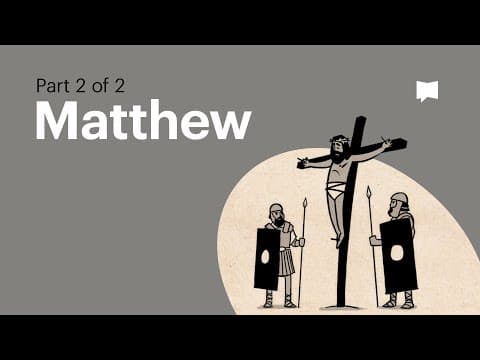
The Gospel of Matthew presents Jesus as the Messiah and explores the conflict between Him and Israel's religious leaders, culminating in His death and resurrection, and the establishment of His kingdom through the Great Commission.
The Gospel according to Matthew provides a profound narrative about Jesus Christ, emphasizing His role as the Messiah and the conflict with Israel's religious leaders. This overview will delve into the key themes and events that shape the Gospel, particularly focusing on the latter chapters that highlight the expectations of the Messiah, Jesus' teachings, and the ultimate fulfillment of His mission.
In the initial chapters of Matthew, Jesus is introduced as the Messiah from the line of David, a new authoritative teacher akin to Moses, and as Emmanuel, meaning "God with us." This sets the stage for understanding His mission and the expectations surrounding His role in the kingdom of God.
As Jesus begins to teach about the arrival of God's kingdom, He gains acceptance among many, but faces rejection from Israel's religious leaders, particularly the Pharisees. This conflict raises the critical question: How will this tension between Jesus and the leaders of Israel unfold?
In chapters 14 through 20, Matthew explores the various expectations people have regarding the Messiah. Jesus performs miracles, including healing the sick and miraculously feeding large crowds, which leads many to believe He is the great prophet and Messiah. However, the religious leaders, influenced by scriptures like Psalm 2 and Daniel 2, anticipate a victorious Messiah who will liberate Israel from oppression. They view Jesus as a false teacher making blasphemous claims, which intensifies their opposition and leads them to plot His death.
In response to the growing conflict, Jesus withdraws to teach His closest disciples about His true identity as Israel's Messiah. In chapter 16, He asks them, "Who do you say that I am?" Peter correctly identifies Him as the Messiah, but his understanding is limited to a king who will reign through military power. Jesus challenges this notion, revealing that He will become king through suffering and sacrifice, aligning with the prophecies of Isaiah about a suffering servant.
Jesus' teachings emphasize the radical nature of His kingdom, which contrasts with conventional values. In His kingdom, honor is gained through serving others, forgiveness replaces revenge, and true wealth is found in generosity towards the poor. To follow the servant Messiah, one must embrace a life of service.
As the story progresses, the clash between Jesus' kingdom and that of Israel's leaders intensifies. Jesus enters Jerusalem for Passover, riding on a donkey, and is hailed by the crowds as the Messiah. He disrupts the temple activities, asserting His authority and challenging the hypocrisy of the religious leaders, which leads them to further plot His demise.
In His final teachings, Jesus critiques the Pharisees and weeps over Jerusalem's rejection of God and His kingdom. He foretells His execution at the hands of these leaders, warning that their actions will lead to their own destruction. However, He assures His disciples that His death is not the end; He will be vindicated through His resurrection and will return to establish His kingdom over all nations.
The narrative reaches a pivotal moment during the Passover meal, where Jesus reinterprets the symbols of bread and wine as representations of His impending sacrifice. After the meal, He is arrested, tried before the Sanhedrin, and ultimately sentenced to death by crucifixion under Roman governor Pilate, despite Pilate's belief in His innocence.
Matthew emphasizes that Jesus' death is not a tragic failure but the fulfillment of prophetic promises. Jesus, as the Servant Messiah, bears the consequences of sin on behalf of His people, showcasing the depth of His sacrifice.
The Gospel concludes with a surprising twist: on Sunday morning, Jesus' tomb is found empty, and He appears alive to His disciples. The book ends with the Great Commission, where the risen Jesus declares His authority as the true king and sends His disciples to spread the good news to all nations. He promises His presence with them until His return, echoing the message of Emmanuel from the beginning of the Gospel.
The Gospel of Matthew presents a rich and complex narrative that reveals Jesus as the Messiah who fulfills the expectations of the Old Testament in unexpected ways. Through His teachings, actions, and ultimate sacrifice, Jesus establishes a new kingdom characterized by service, forgiveness, and hope for all nations. This overview encapsulates the essence of Matthew's Gospel, inviting readers to explore the profound implications of Jesus' life and mission.



















