
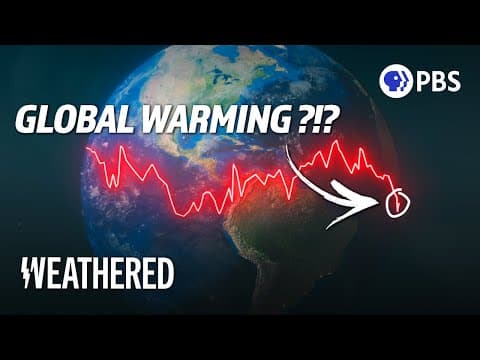
This blog post explores the popular graph among climate skeptics that suggests climate change is part of Earth's natural cycles. It discusses the role of CO2 in climate change, the influence of solar cycles, and the Milankovitch cycles that trigger ice ages. The post emphasizes the unprecedented rate of current climate change due to human activities and the importance of understanding these dynamics to address future challenges.
Climate skeptics often reference a graph that appears to show climate change as a natural part of Earth's cycles. While it is true that Earth has experienced warming and cooling phases throughout its history, the current situation is markedly different. This blog post will dissect the claims surrounding this graph, the role of carbon dioxide (CO2), and the broader implications for our planet's climate.
Historically, Earth has undergone cycles of warming and cooling, influenced by various natural factors. However, according to these natural cycles, we should currently be entering a gradual cooling trend that could lead to another ice age. This is not the case today.
The primary reason we are not heading toward another ice age is the significant increase in atmospheric CO2 levels. Human activities have added approximately 50% more CO2 to the atmosphere than was present during previous warm periods. This raises the question: if CO2 levels historically follow temperature rises, does that mean CO2 is not the primary driver of global warming?
More than 70% of U.S. citizens acknowledge that the Earth is warming, a fact supported by observable evidence such as melting glaciers and increasing extreme heat days. However, the reasons behind this warming are debated.
Zeke Hausfather, a climate scientist, identifies two prevalent arguments from climate skeptics: 1) the climate has always changed, and 2) solar activity is the primary driver of climate change. While these arguments contain elements of truth, they do not fully explain the current warming trend.
When discussing solar cycles, two main types are relevant:
Solar Magnetic Cycle: This 11-year cycle involves fluctuations in solar activity, such as sunspots and solar flares. While these can cause minor short-term climate effects, they do not account for the long-term warming trend observed today.
Milankovitch Cycles: These cycles involve changes in Earth's orbit and axial tilt over thousands of years, influencing the distribution of solar energy across the planet. They are responsible for initiating ice ages by altering how much sunlight reaches the poles.
Milankovitch cycles consist of three components:
These cycles create feedback loops that can lead to significant climate changes, including the onset of ice ages.
While Milankovitch cycles initiate climate changes, CO2 plays a crucial role in amplifying these effects. Increased ice formation reflects sunlight, leading to cooling, which reduces CO2 levels. Conversely, when ice melts, CO2 levels rise, further enhancing warming. This feedback loop is critical in understanding the current climate crisis.
The Earth has experienced extreme temperature fluctuations in its history. During periods known as "snowball Earth," global temperatures plummeted to around -50 degrees Celsius. These deep freezes were eventually alleviated by volcanic eruptions releasing greenhouse gases, including CO2, which warmed the planet.
Since the Industrial Revolution, human activities have released approximately 1.8 trillion tons of CO2, with about 1.1 trillion tons remaining in the atmosphere. This has led to a dramatic increase in atmospheric CO2 levels, as evidenced by the Keeling Curve, which tracks CO2 concentrations since 1958.
Current CO2 levels are around 420 parts per million, significantly higher than any point in the last 800,000 years. Research indicates that this level corresponds to a much warmer world, similar to conditions during the Pliocene epoch, which was about 4.1 degrees Celsius warmer than pre-industrial levels.
The longevity of CO2 in the atmosphere means that even if emissions were halted today, the effects of past emissions would persist for thousands of years. Rapid climate change, as seen today, is associated with mass extinctions in the geological record, raising concerns about the current trajectory of climate change.
While the climate has always changed, the speed of current changes is unprecedented. Historical climate changes occurred over millennia, whereas today's shifts are happening within centuries or even decades. This rapid change poses significant risks to ecosystems and human societies.
Understanding the complexities of climate change is essential for making informed decisions about our planet's future. While the climate has changed in the past, the current situation is unique and requires urgent action. Fortunately, we possess the technology to reduce emissions and mitigate climate change effectively.
As we navigate these challenges, it is crucial to engage in discussions about the impacts of climate change and the lessons we can learn from Earth's history. The future of our planet depends on our collective efforts to address these pressing issues.



















