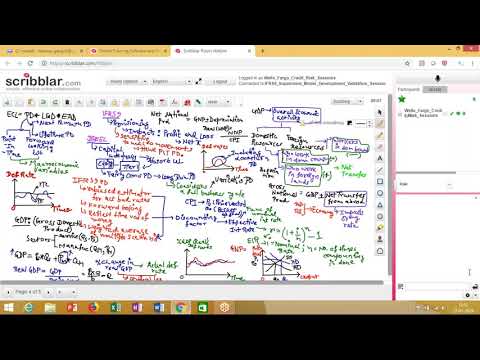
This blog post explores the IFRS 9 modelling framework, focusing on the role of macroeconomic variables and scenario analysis in assessing expected credit losses. It discusses the importance of financial statements, the definitions of impairment, the significance of macroeconomic factors like GDP and unemployment rates, and the methodologies for creating scenarios to predict credit losses.
In the realm of banking and finance, understanding the implications of macroeconomic variables on credit risk is crucial. This blog post delves into the IFRS 9 modelling framework, emphasizing the significance of macroeconomic variables and scenario analysis in predicting expected credit losses (ECL).
The foundation of any financial analysis begins with the key financial statements published by banks:
These statements capture two types of losses:
The IFRS 9 framework is pivotal for assessing the capital adequacy of banks. It is based on the cash flow characteristics of assets, particularly those that meet the Sole Payment of Principal and Interest (SPPI) criteria. Under IFRS 9, impairment is defined as the inability of an account to repay its obligations, with a specific focus on accounts that are 90 days or more overdue.
Impairment calculations under IFRS 9 involve assessing the likelihood of default and the expected loss over different stages:
Macroeconomic variables play a critical role in determining the probability of default (PD) and expected credit losses. Key variables include:
Understanding the interrelation between these macroeconomic variables is essential. For instance, an increase in interest rates can lead to a downturn in GDP, which subsequently raises unemployment and default rates. This interconnectedness necessitates a comprehensive approach to modelling.
When incorporating macroeconomic variables into the PD model, several methodologies can be employed:
A critical aspect of modelling is determining the optimal lag for macroeconomic variables. For example, if GDP increases today, the effect on default rates may not be immediate. Therefore, econometric methods are used to identify the lag that provides the highest correlation with default rates.
Scenario analysis is vital for predicting ECL under different economic conditions. The scenarios typically include:
Scenarios can be created using statistical methods, such as:
The IFRS 9 modelling framework is a comprehensive approach that integrates macroeconomic variables and scenario analysis to assess expected credit losses. By understanding the interplay between these factors, banks can better manage their credit risk and ensure compliance with regulatory requirements. As we move forward, the importance of accurate modelling and scenario analysis will only continue to grow in the ever-evolving financial landscape.