
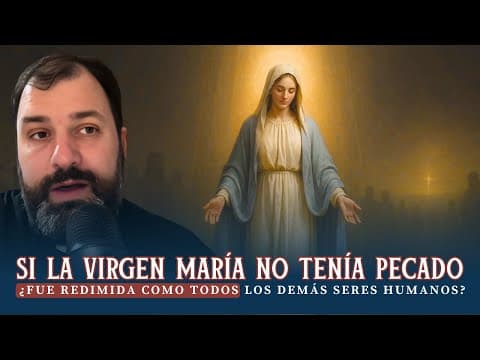
This article explores two profound theological questions: whether the Virgin Mary, being free from original sin, was redeemed like other humans, and the nature of Jesus' ascension into heaven. It clarifies the distinction between original sin and the consequences of sin, the nature of heaven as both spiritual and material, and the metaphorical language used in Scripture to describe divine realities.
In a recent theological conversation, two intriguing questions were addressed regarding core Christian beliefs: the sinlessness and redemption of the Virgin Mary, and the nature of Jesus Christ's ascension into heaven. These topics delve into the mysteries of faith, Scripture interpretation, and the nature of divine realities.
The first question concerns the Virgin Mary and her relationship to original sin and redemption. It is a common belief that Mary was exempt from original sin, but what does this mean in theological terms?
Mary was preserved from original sin by a special grace from God. Unlike Adam and Eve, who were created without original sin but fell into it through disobedience, Mary was conceived without original sin to prepare her to be the Mother of God. This preservation is known as the Immaculate Conception.
Although Mary did not have original sin, she still experienced the consequences of sin. This is similar to Jesus Christ, who was sinless but had a human nature capable of suffering and death. The key point is the difference between having a sinful nature and being a sinner. Both Mary and Jesus had human natures affected by the consequences of sin, which allowed them to suffer and die, but neither committed sin.
The question arises as to why Mary did not possess preternatural gifts such as immortality, integrity, immunity, and infused knowledge. The answer lies in the fact that while she was preserved from original sin, she still shared in the human condition affected by sin's consequences. These gifts were lost due to original sin and were not restored to Mary, who was preserved from sin but not exempt from its effects.
The second question explores the nature of Jesus' ascension as described in the Gospels, where He is seen ascending "between the clouds."
According to Saint Thomas Aquinas, the primary sense of Scripture is literal. Jesus' ascension "between the clouds" can be understood literally, as He ascended with His physical body. However, since God is spirit and heaven is a spiritual reality, some descriptions in Scripture are metaphorical to convey divine truths in human terms.
Heaven is not solely a spiritual realm but also has a material aspect because humans are both body and soul. The resurrection and eternal life involve the whole person, including the body. Therefore, heaven transcends earthly materiality but is still a place where resurrected bodies exist.
God exists outside of time and space, which complicates human understanding of the ascension. Jesus did not ascend into outer space as we know it but into the divine realm beyond the physical universe. This realm is where God dwells, and it is distinct from the created material world.
The ascension serves as a sign for the apostles and believers to set their sights on the heavenly kingdom, the ultimate goal of Christian life. It symbolizes the call to seek what endures beyond this earthly existence.
The discussion also touched on other biblical passages, such as Jesus being tempted in the desert and shown all the kingdoms of the world. This is understood as a vision of the powers and dominions existing at that time, not a literal panoramic view of the entire earth.
The conversation highlighted that although God created all things, the devil held sway over the world due to humanity's sin. Christ's death and resurrection broke the devil's power over humanity, liberating those who accept God's grace.
These theological reflections help deepen the understanding of key Christian doctrines. The Virgin Mary's exemption from original sin does not negate her need for redemption but highlights God's special grace. Jesus' ascension is both a literal and spiritual event that points believers toward the eternal life promised by God.
The dialogue also reminds us of the richness of Scripture, which uses both literal and metaphorical language to communicate divine mysteries in ways accessible to human understanding.
This exploration invites believers and seekers alike to ponder the profound truths of faith and the nature of God's interaction with humanity.
Viva Cristo Rey. Viva la Virgen. Viva el patriarca San José.



















