
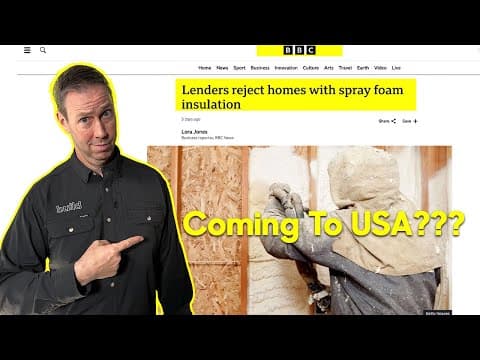
Recent reports indicate that major mortgage lenders in the UK are rejecting homes with spray foam insulation due to concerns about moisture and structural damage. This blog post explores the reasons behind this trend, the implications for homeowners, and the lessons for building practices in different climates.
A recent story from the UK has sparked significant discussion regarding the use of spray foam insulation in homes. Reports indicate that a quarter of the largest mortgage lenders in the UK are now refusing to lend on properties that feature spray foam insulation in the roof. This development raises concerns not only for homeowners in the UK but potentially for those in other regions considering similar insulation methods. In this blog post, we will delve into the reasons behind this trend, the implications for homeowners, and the lessons that can be learned about building practices.
The story gained traction on social media, particularly through platforms like Instagram and YouTube, where building experts and enthusiasts shared their insights. The initial reports suggested that the UK government had funded initiatives to improve energy efficiency in homes, which included the installation of spray foam insulation. This insulation was primarily applied to older homes, many of which are over 50 years old, to prevent heat loss.
Understanding the age of the housing stock in the UK is crucial. Many homes were built before 1919, and the average age of houses in the UK ranges from 50 to 70 years. This older housing stock presents unique challenges when it comes to insulation and energy efficiency.
As the reports unfolded, it became clear that the primary concern with spray foam insulation is its potential to trap moisture. Homeowners who had recently installed spray foam insulation reported issues with dampness and mold, particularly in the roof rafters. One homeowner noted that their mortgage broker insisted on the removal of the spray foam due to concerns that it could cause moisture to rot the rafters.
The condensation problem arises from the interaction between the cold roof deck and the warmer indoor air. In winter, the roof deck can be significantly colder than the interior of the home, leading to condensation forming on the underside of the roof. This is exacerbated by the use of open cell spray foam, which does not act as a vapor barrier. As a result, moisture can accumulate, leading to structural damage over time.
From a building science perspective, the use of open cell spray foam in colder climates is generally discouraged. Open cell foam has a lower R-value and allows moisture to pass through, which can lead to condensation issues if not properly managed. In contrast, closed cell foam acts as a vapor barrier, preventing moisture from penetrating the insulation and causing damage.
For homeowners considering spray foam insulation, especially in colder climates, it is essential to:
The decision by major lenders to reject homes with spray foam insulation highlights the financial risks associated with improper insulation practices. Homeowners may find it increasingly difficult to sell their homes or refinance if they have spray foam insulation that lenders deem problematic. This situation underscores the importance of understanding building science and making informed decisions about home insulation.
The recent developments regarding spray foam insulation in the UK serve as a cautionary tale for homeowners and builders alike. While spray foam can be an effective insulation method when used correctly, it is crucial to consider the specific climate and building conditions. Homeowners should prioritize education in building science and seek professional advice to ensure their homes are insulated properly, minimizing risks for themselves and future owners. As the conversation around building practices continues, it is vital to remain informed and proactive in addressing potential issues before they arise.



















