
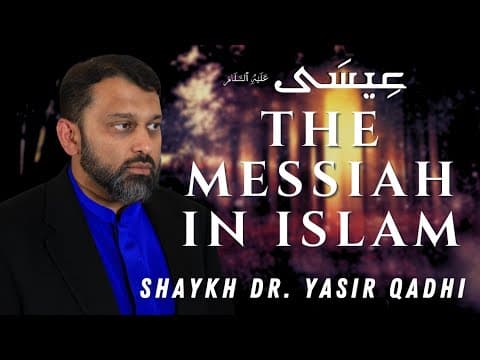
This blog post explores the Islamic view of Jesus Christ, known as Isa, as presented in the Quran. It discusses his miraculous birth, his teachings, the miracles he performed, and the theological differences between Islam and Christianity regarding his nature and role. The post also delves into the historical context of early Christianity and the evolution of its doctrines, emphasizing the Quran's stance on Jesus and the implications for Muslims living in a predominantly non-Muslim society.
In contemporary discussions, it is essential for Muslims to understand the differences between their beliefs and those of the broader society, particularly regarding the figure of Jesus Christ. This post aims to summarize the Islamic perspective on Jesus, known as Isa, as presented in the Quran, and to highlight the theological distinctions that are crucial for Muslims, especially in a diverse religious landscape.
Jesus is mentioned in the Quran 25 times, while his mother, Mary (Mariam), is referenced over 34 times, indicating the significance of both figures in Islamic theology. Notably, there is a whole Surah (chapter) named after Mary, emphasizing her importance in the narrative.
The story of Jesus' birth is primarily detailed in Surah Maryam. The first three and a half pages of this Surah describe the miraculous conception and birth of Jesus. The angel Gabriel (Jibril) announces to Mary that she will give birth to a righteous child who will speak from the cradle and perform miracles. This miraculous birth is a cornerstone of Islamic belief, showcasing God's power and mercy.
The Quran outlines several miracles performed by Jesus, including:
These miracles affirm Jesus' status as a prophet and messenger of God, but they do not imply divinity.
The Quran presents a unique perspective on the end of Jesus' life. It states that Jesus was not killed or crucified, a claim that contradicts the Christian narrative. Instead, the Quran asserts that it was made to appear as though he was killed, and that God raised him up to Himself. This interpretation has been widely accepted among Islamic scholars throughout history.
Several theories exist regarding the events surrounding Jesus' ascension. One prominent theory is the substitution theory, which suggests that someone else was crucified in Jesus' place, possibly Judas Iscariot. This theory posits that God saved Jesus from crucifixion and raised him up, while another was punished in his stead.
The Quran emphasizes that those who claim Jesus is divine or part of a Trinity have committed blasphemy. It clearly states that both Jesus and Mary were created beings who relied on God for sustenance, thus refuting the notion of their divinity. The Quran warns against exaggerating in religious beliefs and encourages followers to adhere to the truth.
The Quran's revelations regarding Jesus and early Christianity are particularly remarkable given the historical context of 6th century Arabia. At that time, the Arabs had little knowledge of the complexities of Christian theology, which had evolved significantly after Jesus' ascension.
After Jesus' departure, various strands of Christianity emerged:
The conversion of Emperor Constantine to Christianity in the 4th century marked a significant turning point. He adopted Pauline Christianity as the state religion, leading to the establishment of the Nicene Creed, which formalized the doctrine of the Trinity. This decision effectively marginalized other interpretations of Christianity and solidified the theological framework that many Christians follow today.
The Islamic perspective on Jesus Christ is rooted in the Quran, which presents him as a revered prophet and messenger, distinct from the divine figure portrayed in Christianity. Understanding these differences is crucial for Muslims, especially in a multicultural society. As we approach various religious celebrations, it is important for Muslims to maintain their beliefs while engaging respectfully with others, particularly in family gatherings. Ultimately, the teachings of Islam emphasize the importance of adhering to the truth and presenting Islam positively to others.



















