
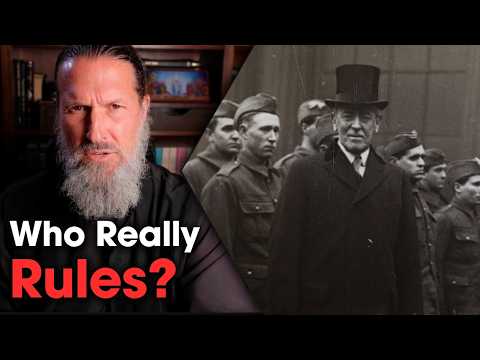
This article explores the concept of the new world order from a Christian perspective, emphasizing that the true new world order was established 2,000 years ago by Jesus Christ. It highlights the kingdom of God as a cosmic, eternal realm with unique characteristics such as a new king, conversions, consecration, fearlessness, martyrdom, fellowship, miracles, worship, and continuous evangelism, contrasting it with secular political ideas.
The phrase "new world order" has been used throughout history in various political contexts—from President Woodrow Wilson's vision for peace through the League of Nations in the early 20th century, to President George H.W. Bush's remarks following the fall of the Soviet Union, and more recently by secular elites discussing a technical world order beyond nations. However, there is a far more profound and eternal new world order that transcends politics and earthly realms.
The true new world order was established over 2,000 years ago by Jesus Christ, the Savior of the world. When Jesus began His public ministry, He proclaimed, "Repent, for the kingdom of God is at hand." This kingdom is not a political construct but an eternal, cosmic kingdom that governs all aspects of existence, including the inner human spirit.
This kingdom is unique and universal, extending beyond earthly nations and political systems. It is centered on God and His Holy Spirit dwelling within believers' hearts. The kingdom's capital is within each person, as Jesus said in the Gospel of Luke, "The kingdom of God is within you."
At the heart of this new world order is a new King—Jesus Christ—who reigns at the right hand of God the Father. All earthly rulers are called to acknowledge Him as the King of kings and Lord of lords. Psalm 2 urges, "Kiss the Son, lest he become angry and you perish in the way. Blessed are all who put their trust in him."
The King's rule is internal and mystical, marked by the indwelling of the Holy Spirit in believers. Baptism and chrismation (anointing with the Holy Spirit) serve as the spiritual passport and seal of membership in this kingdom.
Conversions are a normative and ongoing reality within the kingdom. The Acts of the Apostles recounts the conversions of the apostles themselves, including Peter's repentance after denying Christ and Paul's radical transformation on the road to Damascus. Throughout church history, conversions have remained central.
Consecration to Christ and His kingdom is a normal part of Christian life. The apostles abandoned their former lives to dedicate themselves fully to Christ. Saints like St. Fotini, the Samaritan woman, exemplify this by evangelizing and living a life devoted to God. Monks, nuns, priests, bishops, and families consecrate themselves to serve Jesus in various ways.
The fear of God drives out all other fears. The early disciples boldly defied authorities and persecution with joy, demonstrating the fearless nature of those living under God's kingdom.
Martyrdom is central to the church's life and is the ultimate expression of love for God. The New Testament recounts the martyrdom of figures like St. Stephen and the eventual martyrdom of apostles Peter and Paul. St. Athanasius the Great noted that the church's willingness to embrace death joyfully for 20 centuries is proof of Christ's resurrection.
The kingdom fosters deep fellowship among believers, often superseding biological family ties. Jesus taught that loyalty to Him and the spiritual family may even cause division within biological families. The church community, or kinia parish life, is vital, as seen in Acts 2, where the church is the center of family and community life.
Miracles are a normal part of the kingdom's life. From Jesus conquering death to the ongoing miracles recorded in the Acts of the Apostles, the Christian life is marked by answered prayers, repentance, and transformation.
Heavenly worship is the center of Christian life. Churches serve as outposts of the kingdom of heaven on earth, often placed at the heart of cities and towns. Worship provides stability, inspiration, and a connection to the divine.
Evangelism is a continuous and essential activity within the kingdom. The gospel is the power of God for salvation, and the church faithfully proclaims the words of Christ, offering eternal life to all who believe.
The new world order that truly matters is not a political or secular invention but the eternal kingdom established by Jesus Christ 2,000 years ago. It is a kingdom characterized by a new King, spiritual transformation, fearless faith, sacrificial love, deep fellowship, miraculous power, worship, and ongoing evangelism. While political leaders may strive to create new orders, the kingdom of God stands supreme and eternal.
Glory to Jesus Christ, the King of this new world order.
For those interested in exploring these themes further, there is an upcoming Christian Life Conference featuring scholars from various seminaries. It promises to be an enriching experience for anyone seeking to deepen their understanding of the Christian faith and the kingdom of God.



















