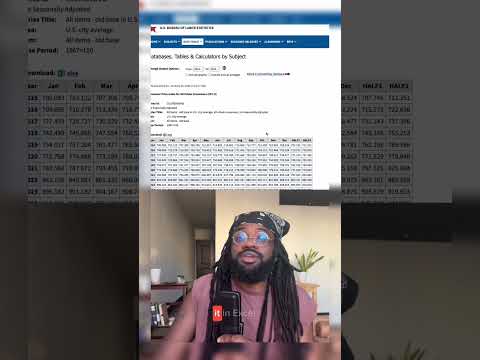
The Bureau of Labor Statistics (BLS), part of the US Department of Labor, is the primary source of America's economic data, including jobs reports, inflation rates, and workforce participation. The BLS provides various tools and an API for accessing and analyzing this data, enabling journalists, developers, and researchers to track economic trends dating back to the 1990s.
Economic data plays a crucial role in understanding the health and trends of a nation's economy. In the United States, the primary agency responsible for collecting and publishing this data is the Bureau of Labor Statistics (BLS). This article explores where economic data comes from, how it is collected, and the tools available for accessing and analyzing this information.
The Bureau of Labor Statistics is often described as America's economic information agency. It operates under the umbrella of the US Department of Labor and is tasked with gathering a wide range of economic data. This includes key indicators such as:
Essentially, the BLS provides factual data that reflects the state of the economy.
The BLS collects data through various surveys and statistical methods to ensure accuracy and reliability. Once collected, the data is organized into what the agency refers to as "series." Each series represents a specific dataset, such as unemployment rates or consumer price indexes.
These series are then published regularly, allowing analysts, policymakers, journalists, and the public to monitor economic conditions over time.
The BLS offers a variety of tools on its website to facilitate data access and analysis:
Users can search for specific data series through the BLS website. The platform allows for viewing data directly online or downloading it in Excel format. This flexibility supports different user needs, whether for quick reference or detailed analysis.
For developers and those interested in creating economic tools, the BLS provides an Application Programming Interface (API). This API enables users to make up to 500 requests per day to retrieve data in a simple, structured format.
The API returns essential information such as:
This functionality is particularly useful for building charts and tracking economic trends over extended periods.
Journalists often use the BLS data to report on economic conditions accurately. Developers leverage the API to create interactive tools and visualizations that help the public understand complex economic information.
For example, one can create charts that track employment rates or inflation from the 1990s to the present, providing valuable insights into long-term economic patterns.
The Bureau of Labor Statistics serves as a vital resource for economic data in the United States. Through its comprehensive data collection, user-friendly tools, and accessible API, the BLS empowers a wide range of users to analyze and understand the economy. Whether you are a journalist, developer, researcher, or simply an interested citizen, the BLS offers the data and tools necessary to explore America's economic landscape thoroughly.