
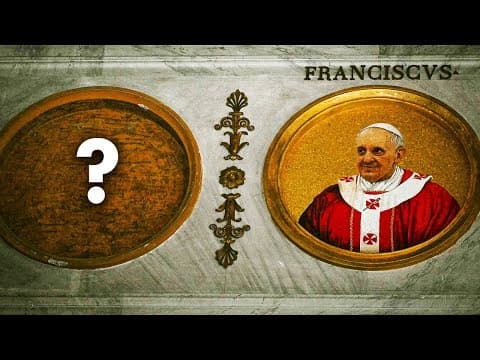
The papal conclave is a centuries-old electoral process by which the Catholic Church selects a new pope following the death of a pope. This blog post details the historical context, procedures, and significance of the conclave, highlighting the roles of cardinals, voting methods, and the importance of secrecy in this sacred process.
On April 21st, 2025, Pope Francis passed away at the age of 88, marking the beginning of one of the world's oldest electoral systems: the papal conclave. This centuries-old process is how the Catholic Church selects a new pope, and it is steeped in tradition and significance.
The term "conclave" comes from the Latin word cum clave, meaning "with a key." This reflects the literal practice of cardinals locking themselves in a room to reach a decision without outside distractions or influences. Historically, the selection of a pope was chaotic, with various methods employed, including a pope selecting his own successor or local politicians intervening. To bring order to this process, Pope Gregory X formalized the conclave in 1274 with the decree Ubi Periculum, establishing rules that included locked doors and limited outside contact.
Today's conclave procedures are governed by the apostolic constitution Universi Dominici Gregis, issued by Pope John Paul II in 1996 and updated by Pope Benedict XVI in 2013. This document serves as the blueprint for modern papal elections, detailing everything from the electors to the voting process.
When a pope dies, the Church enters a period known as sede vacante, which translates to "vacant seat." During this time, a cardinal known as the Camerlengo takes on a crucial role. He declares the papal seat vacant, secures the late pope's personal effects, seals the papal apartments, and arranges for the destruction of the late pope's fisherman's ring. A new ring will be created for the next pope.
The governance of the Church during this period falls to the College of Cardinals, who are senior clergy and the pope's closest advisers. While they manage routine business, they cannot enact new teachings or make significant appointments, adhering to the principle of nihil novi, meaning nothing new is to be enacted.
From the moment the pope is pronounced dead, cardinals have 15 to 20 days to gather in the Vatican for the conclave. Only cardinals under the age of 80 are eligible to vote, a rule established in 1970 by Pope Paul VI. As of 2025, there are 252 cardinals, with 135 eligible to vote. Cardinals over 80 can participate in preliminary discussions but cannot vote.
On the morning of the conclave, all cardinal electors attend a special mass in St. Peter's Basilica called the Mass pro eligendo Pontifice, invoking the guidance of the Holy Spirit as they prepare for their significant decision.
After the mass, the cardinal electors gather in the Sistine Chapel, which is transformed into a secure voting chamber. Each cardinal takes an oath of secrecy and fidelity to the rules, swearing not to be influenced by external pressures. The chapel is secured with electronic jamming equipment to prevent any outside communication.
Once the chapel is locked, the voting begins. Each elector votes on a rectangular paper ballot, with the upper half stating "Eligo" (I elect) and the lower half left blank for the name. Voting occurs up to four times a day, with the first ballot typically held on the first afternoon.
After ballots are cast, they are counted, and the results are communicated to the outside world via smoke signals from the chapel chimney. Black smoke indicates no pope has been elected, while white smoke signals that a new pope has been chosen. A two-thirds majority is required for election, a rule that has been in place for over 800 years to ensure broad consensus.
If no candidate receives the necessary votes after three days, a day of prayer and reflection is held to encourage unity among the cardinals. If voting continues without a result for 12 to 13 days, the conclave narrows the choice to the top two candidates for a runoff.
Once a candidate receives the required two-thirds majority, the dean of the cardinals asks if the elected cardinal accepts the position. If he accepts, he becomes pope immediately, and if he is not already a bishop, he is ordained on the spot. The new pope then chooses a papal name, often reflecting his vision for his papacy.
Following this, the conclave concludes, and the new pope is led to the Room of Tears, where he dons papal vestments. This room is known for the emotional reactions of newly elected popes. Afterward, the senior cardinal deacon announces the new pope from the balcony of St. Peter's Basilica, declaring "Habemus Papam" (We have a pope), followed by the pope's birth name and chosen papal name.
The papal conclave is a profound and intricate process that reflects the traditions and governance of the Catholic Church. From the solemnity of the sede vacante to the excitement of the election, each step is steeped in history and significance, culminating in the introduction of a new leader for millions of Catholics around the world. As the world awaits the announcement of a new pope, the conclave remains a testament to the enduring nature of this ancient institution.



















