
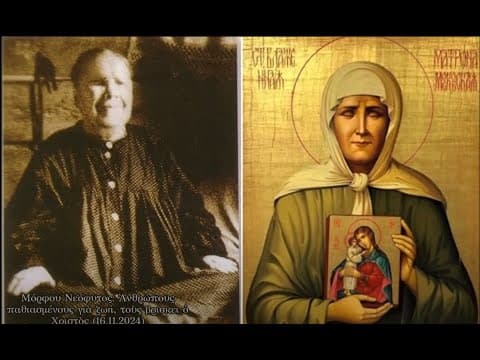
This blog post explores the prophecies of St. Matrona the Blind, particularly her insights on the current era, the impact of death, and the importance of faith and charity in the face of life's challenges, as discussed by Metropolitan Neophytos.
In a recent sermon, Metropolitan Neophytos reflected on the teachings and prophecies of St. Matrona the Blind, a revered saint who passed away in 1952. Her insights into the human condition and the spiritual journey resonate deeply in our current times, especially as we navigate the complexities of life, death, and faith.
The sermon began with a heartfelt acknowledgment of the family of Konstantinos, who had recently passed away. The Metropolitan emphasized the importance of mourning and the rituals surrounding death, particularly the 40 days following a person's passing, which are crucial for the soul's journey. He noted that clergy often struggle to convey the true essence of eternal life, as it is ultimately God who gives and takes life.
St. Matrona left behind a series of prophecies that describe the age we are currently living in, particularly in relation to the events leading up to and during World War III. She foresaw a time when many good people would be taken from this world at a young age, either through accidents or incurable diseases. Her words serve as a stark reminder of the fragility of life and the need for spiritual preparedness.
According to St. Matrona, the period preceding the next global conflict would be marked by a significant loss of life among those who are good but perhaps weak in their faith. She warned that God would intervene, taking these individuals early to prevent their spiritual decline. This prophecy highlights the urgency for individuals to strengthen their faith and engage in acts of charity.
During the anticipated World War, St. Matrona predicted that millions would perish. The Metropolitan pointed out the distinction between those who die now and those who will die during the war, suggesting that the former are blessed. The living have the opportunity to honor the deceased through acts of kindness, memorial services, and a reaffirmation of faith, which can elevate the souls of those who have passed.
The sermon prompted listeners to reflect on the nature of life and death. The Metropolitan posed a thought-provoking question: "Who is more alive, me or those who have passed?" This inquiry encourages a deeper understanding of existence beyond mere physical life. He emphasized that after death, individuals enter a state of light, which can be either enlightening or filled with guilt, depending on their earthly actions.
Clergy members, according to the Metropolitan, have the ability to discern who resides in the light and who is burdened by guilt. He reflected on Konstantinos' death and the impact it had on the community, sparking a renewed interest in eternal life and the Second Coming of Christ. This serves as a reminder that every death can be a catalyst for spiritual awakening among the living.
The sermon concluded with a call to action for the congregation to live with an awareness of Christ and the promise of eternal life. The Metropolitan expressed his personal desire to deepen this connection and urged others to do the same. He emphasized that life should not merely be viewed as an opportunity for enjoyment but as a journey towards understanding the eternal reality of the Father, Son, and Holy Spirit.
Metropolitan Neophytos' reflections on St. Matrona the Blind's prophecies provide a profound perspective on the challenges of modern life, the inevitability of death, and the importance of faith. As we navigate our own lives, her teachings remind us to engage in acts of charity, seek spiritual enlightenment, and prepare for the eternal life that awaits us beyond this world.
In the words of the Metropolitan, may we all strive for a deeper connection with our faith and support one another in this journey towards the light.



















