
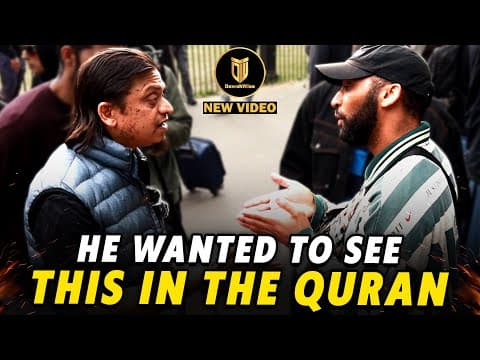
This blog post explores a discussion on the Quran's compilation, its nature as a divine revelation, and the distinction between Quranic text and historical events, emphasizing that the Quran is complete and closed after the Prophet Muhammad's death.
In a recent discussion at Speakers Corner, a debate unfolded regarding the nature of the Quran, its compilation, and the historical events surrounding it. This conversation highlighted the misunderstandings that often arise when discussing religious texts and their interpretations.
The Quran, as understood by Muslims, is the verbatim word of God revealed to the Prophet Muhammad. It is crucial to note that after the Prophet's death, there was no further revelation; the Quran was considered complete. This completion signifies that any events or instructions that occurred after his passing cannot be part of the Quran itself. The Quran is not a historical narrative but a divine text.
During the discussion, a participant questioned the absence of certain historical events in the Quran, specifically asking for evidence of instructions to burn other copies of the Quran. The response clarified that such instructions would not be found in the Quran because they pertain to historical actions taken by individuals, not divine revelations. The Quran is distinct from historical accounts, which may be documented in other sources such as hadith or historical texts.
The conversation emphasized that while the Quran is a closed book of revelation, historical events, such as the apostasy wars that occurred shortly after the Prophet's death, are documented outside of the Quran. These events are significant for understanding the early Islamic community but are not included in the Quranic text. Instead, they can be found in historical biographies and hadith literature.
A key point made during the discussion was the nature of the Quran as a divine revelation. The Quran is not the words of the Prophet or any subsequent leaders; it is believed to be the direct word of God. Therefore, any instructions or actions taken by historical figures, including the compilation of the Quran, are not part of the Quranic text itself. This distinction is vital for anyone seeking to understand the Quran's role in Islamic faith and history.
The discussion at Speakers Corner serves as a reminder of the importance of understanding the Quran's nature and its historical context. The Quran is a complete and closed text, and any inquiries about historical events should be directed towards historical sources rather than the Quran itself. This understanding is essential for a comprehensive grasp of Islamic teachings and the early history of the Muslim community.



















