
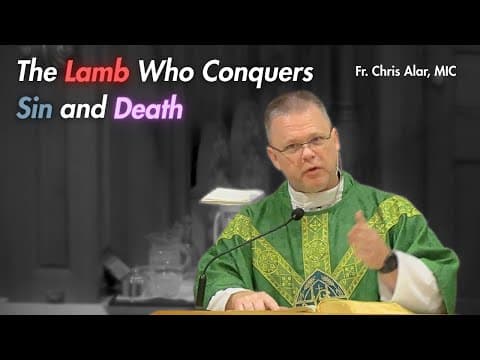
This article explores the traditional practices maintained by the Marians regarding Christmas decorations and the liturgical calendar, clarifies the three theophanies of Epiphany, and delves into the profound symbolism of Jesus as both the Lamb of God and the Good Shepherd, explaining the significance of His sacrifice and love for humanity.
In many churches today, certain traditional practices have evolved or been simplified, but some communities, like the Marians, continue to uphold older customs that enrich the faith experience. This article clarifies questions about Christmas decorations during Ordinary Time, explains the three theophanies traditionally celebrated during Epiphany, and explores the deep theological meaning behind Jesus being called the Lamb of God and the Good Shepherd.
Many observant viewers and parishioners have asked why Christmas decorations remain in the church even though the liturgical calendar has moved into Ordinary Time. The Marians maintain a bit of the traditional form of the faith, which includes practices not commonly seen in many modern churches, such as altar rails for kneeling.
Traditionally, the Christmas season extended beyond the Baptism of Jesus, which is now considered the end of Christmas in the current liturgical calendar. Historically, however, the Christmas season lasted until the Presentation of Jesus on February 2nd, which is 40 days after Christmas. This tradition is still maintained by the Marians, even though the Novus Ordo Mass (the ordinary form of the Mass) does not explicitly include this.
The Presentation marks the end of the Christmas season in traditional practice. This day commemorates when Mary and Joseph presented Jesus at the temple 40 days after His birth, fulfilling Jewish law. While many churches have moved on to Ordinary Time after the Baptism of Jesus, the Marians keep the Christmas decorations up until this day, preserving the richness of the traditional liturgical calendar.
Epiphany originally referred to three significant events revealing Christ's divinity:
These three events were once celebrated together as the Epiphany. Over time, the Church separated these celebrations:
There was some confusion regarding the readings for the Wedding at Cana, which is read in Year C of the liturgical cycle in the traditional Mass. The current year (Year A) includes readings such as the first chapter of John, focusing on Jesus as the Lamb of God.
Jesus is often called the Lamb of God, a title rich with meaning. The lamb symbolizes sacrifice and redemption. According to Christian belief, the penalty for sin is death, and humanity deserves this penalty because of sin. Jesus, however, took this penalty upon Himself by dying on the cross, paying the price for humanity's sins.
Jesus is also referred to as the Good Shepherd because He leads His flock away from danger and into safe pastures. This imagery emphasizes His role as a protector and guide for believers.
Every Catholic church features a crucifix (a cross with the body of Christ) rather than just a plain cross. This is because the Mass is a representation of Calvary, the place where Jesus was crucified. The sanctuary is often elevated to symbolize the mountain of Calvary. The Mass is not a re-crucifixion but a participation in the one sacrifice of Christ.
Jesus' death on the cross serves two purposes:
This dual purpose is central to Christian theology. Jesus lays down His life not only because it is necessary for redemption but also because of His love.
An interesting reflection shared involves soldiers who die honorably in battle. While it is not dogmatic teaching that they go straight to heaven, it is fitting to think so because "no greater love hath a man than to lay down his life for another." This parallels Jesus' sacrifice and highlights the profound nature of self-giving love.
The traditions maintained by the Marians, such as keeping Christmas decorations until the Presentation and recognizing the three theophanies, connect believers to the rich history and theology of the Church. Understanding Jesus as both the Lamb of God and the Good Shepherd deepens appreciation for His sacrifice and love. These insights invite the faithful to engage more deeply with the liturgical calendar and the profound mysteries of the Christian faith.



















