
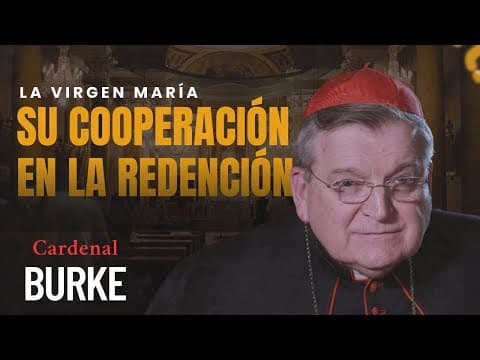
Cardinal Burke discusses the theological significance of the Blessed Virgin Mary's role as Co-Redemptrix, emphasizing her unique cooperation in the redemption process alongside Jesus. He explores historical debates, scriptural foundations, and the implications of this title for the Church and believers today.
In a recent address, Cardinal Burke delved into the profound theological implications of the Blessed Virgin Mary’s role as Co-Redemptrix. This title, which has sparked considerable debate within the Church, highlights Mary’s unique collaboration in the work of redemption alongside Jesus Christ. Cardinal Burke reflects on historical perspectives, scriptural foundations, and the significance of this role for contemporary believers.
Cardinal Burke begins by expressing gratitude for the prayers and support he received during a challenging period of illness in 2021. He emphasizes the importance of community and prayer, especially in times of darkness, both in the world and within the Church.
For decades, the Church has engaged in discussions regarding Mary’s active participation in the redemption process. The central question revolves around her identity as the new Eve and her relationship with Jesus, the new Adam. The term "Co-Redemptrix" has been used for over 500 years to articulate Mary’s role, indicating that while she is not equal to Jesus, she played a crucial part in the redemption of humanity.
The Second Vatican Council addressed Mary’s role in its dogmatic constitution, Lumen Gentium, particularly in sections 56-62. However, the term "Co-Redemptrix" was deliberately avoided to prevent misunderstandings among Protestant communities. Despite this, the Council affirmed Mary’s mediation of grace, which flows from her role as Co-Redemptrix.
Cardinal Burke references Pope St. John Paul II, who articulated the Church’s growing understanding of Mary’s unique participation in Christ’s redemptive work. This understanding has evolved over centuries, beginning with early Church Fathers like St. Irenaeus, who recognized Mary’s consent at the Annunciation as pivotal for humanity’s salvation.
St. Irenaeus highlighted the contrast between Eve’s disobedience and Mary’s obedience, suggesting that just as Eve contributed to humanity’s downfall, Mary’s acceptance of God’s will brought about salvation. This theme of cooperation is echoed in the writings of other Church Fathers, who emphasized Mary’s integral role in the mystery of salvation.
The scriptural foundation for Mary’s role as Co-Redemptrix is rooted in the Protoevangelium, where God promises salvation through a woman. This promise is fulfilled in the Annunciation, where Mary’s acceptance leads to the Incarnation of Christ. Cardinal Burke notes that Mary’s virginity and her role as the Mother of God are essential to understanding her participation in redemption.
During the Annunciation, the Archangel Gabriel announces that Mary will conceive the Son of God. Her response, "Let it be done to me according to your word," signifies her willingness to cooperate in God’s plan for salvation. This moment is crucial, as it marks the beginning of Mary’s active role in the redemptive mission of Christ.
Cardinal Burke distinguishes between two aspects of redemption: objective redemption, which refers to Christ’s sacrifice, and subjective redemption, which pertains to the application of grace to individuals. Mary participates in both aspects, making her role as Co-Redemptrix unique among all believers.
The call to holiness is a shared mission among all Christians, who are invited to unite their sufferings with Christ’s passion. St. Paul’s writings emphasize that believers can participate in the redemptive work of Christ, echoing the idea that Mary’s cooperation is a model for all Christians.
Mary’s co-redemptive mission culminates at the foot of the cross, where she experiences profound sorrow alongside her Son. This moment solidifies her role as a spiritual mother to all believers, guiding them towards Christ. Cardinal Burke emphasizes that Mary’s unique privileges do not separate her from humanity but rather draw her closer to it, inviting all to recognize their mission in the world.
Cardinal Burke’s exploration of Mary as Co-Redemptrix sheds light on the theological significance of her role in salvation history. By understanding Mary’s unique cooperation with Christ, believers are encouraged to embrace their own call to participate in the redemptive mission of the Church. The title Co-Redemptrix, while historically debated, serves as a reminder of the profound connection between Mary and all Christians in the journey towards salvation.
In closing, Cardinal Burke invokes the intercession of the Blessed Virgin Mary, encouraging the faithful to deepen their relationship with her as they seek to follow Christ more closely.



















