
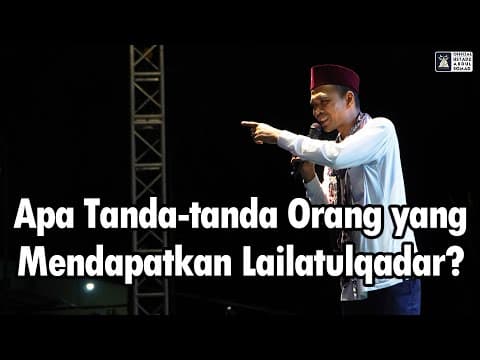
This blog post explores the signs of receiving Lailatul Qadar as discussed by Ustadz Abdul Somad, emphasizing the importance of change in behavior post-Ramadan, the significance of Nuzul Quran, and the principles outlined in the Quran regarding human equality, rewards, and the temporary nature of life.
In a recent talk, Ustadz Abdul Somad delves into the profound topic of Lailatul Qadar, a night of great significance in the Islamic faith. He emphasizes that the exact recipients of this blessed night remain unknown, which encourages believers to continuously strive for improvement in their worship and character.
Lailatul Qadar, often referred to as the Night of Decree, is a night when the Quran was revealed to Prophet Muhammad. Imam Abul Fida Ismail Ibn Katsir notes that no one can definitively know who has received the blessings of Lailatul Qadar, which serves to keep the spirit of hope and worship alive among Muslims.
Ustadz Somad highlights that one of the key signs of having received Lailatul Qadar is noticeable change in a person's behavior after Ramadan. He shares a personal anecdote about a husband who experienced a positive transformation, indicating that true acceptance of this night leads to tangible changes in life.
The talk also touches on the significance of Nuzul Quran, the night when the Quran was first revealed. Ustadz Somad explains that this event is commemorated on the 17th of Ramadan according to the Shafi'i school of thought, based on historical accounts of the Quran's revelation during the Battle of Badr.
The exact date of Nuzul Quran is shrouded in mystery, with various interpretations suggesting different nights. This ambiguity serves to enhance the spiritual quest for Lailatul Qadar, as believers are encouraged to seek it earnestly during the last ten nights of Ramadan.
Ustadz Somad outlines five fundamental principles derived from the Quran:
Equality of Humanity: The Quran teaches that all humans are created equal, regardless of gender, race, or social status. The most honored among them are those who are most conscious of God.
Reward and Punishment: The Quran emphasizes that good deeds are rewarded with paradise, while wrongdoing leads to punishment. This principle encourages believers to act righteously.
Certainty of Law: The Quran provides clear laws and guidelines for justice, ensuring that everyone is held accountable for their actions.
Transience of Life: Life is portrayed as a temporary phase, with the ultimate goal being the hereafter. This understanding motivates believers to prioritize their spiritual journey over worldly gains.
Power of Prayer: The Quran is filled with prayers and supplications, encouraging believers to seek help and guidance from God in their own words, regardless of their ability to recite the Quran.
Ustadz Abdul Somad's insights into Lailatul Qadar and the teachings of the Quran serve as a reminder for Muslims to reflect on their lives and strive for improvement. The signs of having received Lailatul Qadar are evident in the changes one makes post-Ramadan, reinforcing the importance of continuous growth in faith and character. As believers, it is essential to embrace these teachings and apply them in daily life, fostering a community that values equality, justice, and spiritual devotion.



















