
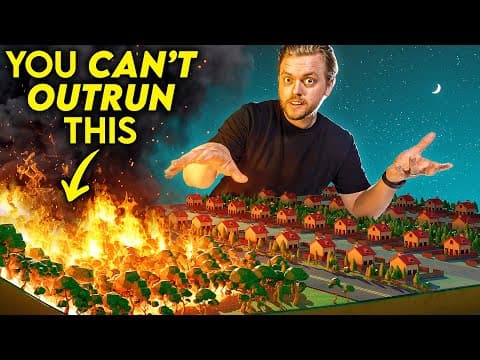
This blog post explores the mechanics of wildfires, their rapid spread, and the human factors contributing to their devastation, based on a simulation created by a VFX artist and insights from fire science experts.
Wildfires have become a pressing concern, especially in areas like Los Angeles, where their catastrophic potential has been starkly illustrated in recent years. This blog post delves into the mechanics of wildfires, their rapid spread, and the human factors contributing to their devastation, based on a simulation created by a VFX artist and insights from fire science experts.
The simulation begins with a wildfire igniting near a residential community. Initially, one might assume that homes are safe, recalling past experiences where firefighters successfully contained nearby flames. However, the reality of wildfires is far more alarming. In January, a wildfire erupted in Los Angeles, fueled by hurricane-force winds exceeding 100 mph, forcing 100,000 people from their homes and devastating the area.
As of the recording, the fires had consumed 60 square miles (155 square kilometers) of LA County, equivalent to 30,000 football fields. At the peak of the flames, the fire was burning through 7.5 football fields per minute, leading to the destruction of at least 16,000 structures, many of which were homes. This shocking property damage highlighted the urgent need to understand how wildfires function and spread.
To grasp the complexities of wildfires, the VFX artist collaborated with Professor Rory Haden, an expert in fire science. According to Professor Haden, three essential elements are required for a fire to ignite: fuel, oxygen, and heat. When wood or vegetation ignites, it must first turn into vapor, which requires significant heat. Once vaporized, it can mix with air and ignite, creating a flammable gas mixture.
Humidity plays a crucial role in wildfire dynamics. In the simulation, the artist demonstrated how high humidity in a lush spring forest slows the spread of fire. Conversely, after eight months of drought, the absence of moisture allows fires to spread rapidly, burning hotter and igniting surrounding vegetation more easily. This stark contrast illustrates how environmental conditions can drastically alter wildfire behavior.
Wind is another critical factor in wildfire spread. The Santa Ana winds, known for their strength, can preheat fuel ahead of the flames and stretch the fire's reach. Under intense wind conditions, vegetation can dry out rapidly, creating a perfect storm for wildfire ignition. The simulation showed that with hurricane-strength winds, the fire's speed and intensity increased dramatically, making it nearly impossible to outrun.
Embers, or firebrands, are small pieces of burning material that can travel ahead of the main fire front, igniting new fires in areas previously thought to be safe. These embers can be generated at rates of hundreds or thousands per meter of fire length, posing a significant threat to structures and communities. The unpredictability of ember spread adds another layer of complexity to wildfire management.
Fighting wildfires becomes increasingly difficult as they escalate. Traditional firefighting methods often involve creating firebreaks or backburning to consume fuel before the main fire reaches it. Aerial firefighting, while visually impactful, can be challenging and imprecise. The simulation highlighted the overwhelming nature of wildfires, where the sheer volume of embers can render firefighting efforts nearly futile.
A critical aspect of wildfire dynamics is human involvement. Rachel Lman, a PhD in forest ecology, noted that approximately 95-96% of wildfires are caused by human activities, such as escaped campfires, downed power lines, and arson. Urban expansion into wildland areas increases the likelihood of human ignitions, exacerbating the wildfire problem.
While wildfires can be devastating, they also play a role in ecosystem health. Many biomes are adapted to fire, which can enhance biodiversity and nutrient cycling. However, the accumulation of fuel due to fire suppression efforts over the past century has led to denser forests, making them more susceptible to catastrophic fires.
Addressing the wildfire crisis requires a multifaceted approach. Solutions include intentional fire management practices, such as controlled burns, to reduce fuel loads and mitigate future wildfire risks. Learning from Indigenous practices of fire management can also provide valuable insights into sustainable approaches to coexist with fire.
The simulation and expert insights reveal the complex interplay of environmental factors and human actions in the wildfire crisis. As wildfires continue to threaten communities, understanding their mechanics and our role in their ignition is crucial for developing effective management strategies. While the challenges are significant, there is hope in learning to live with fire responsibly and sustainably.



















