
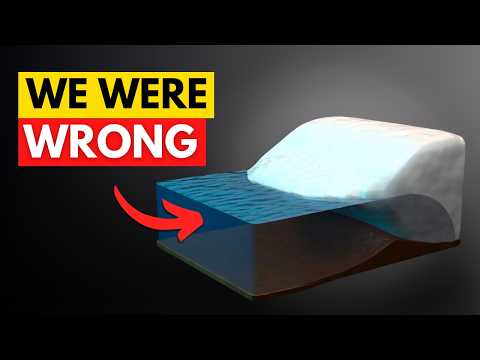
Recent studies reveal new insights into the Thwaites Glacier, also known as the Doomsday Glacier, highlighting its rapid melting and potential to raise sea levels significantly. The research indicates a complex interplay of factors affecting the glacier's stability, emphasizing the urgent need for intervention to mitigate catastrophic sea level rise.
On the west coast of Antarctica lies the Thwaites Glacier, a massive body of ice that may be more crucial to the future of Earth than any other geographical feature. Dubbed the "Doomsday Glacier," its potential loss could raise sea levels by more than 3 meters, threatening cities from New York to Miami and London. Recent studies from the International Thwaites Glacier Collaboration (ITGC) have provided new findings that challenge previous understandings of this unfolding crisis and shed light on the complexities of the glacier's disintegration.
The Thwaites Glacier stands at 1 kilometer tall, towering over the Burj Khalifa by 172 meters, and is the widest glacier on the planet, measuring 120 kilometers across. It covers an area of 192,000 square kilometers and is part of the West Antarctic Ice Sheet, which is nearly three times the size of Texas. While ice around Antarctica has been retreating due to warming ocean temperatures, Thwaites Glacier is retreating at an alarming rate, contributing to 4% of global sea level rise and losing about 50 billion tons of ice each year.
The glacier's vulnerability is largely due to its geographical position. The ice in Antarctica typically rests atop a landmass, with snow accumulation pushing ice toward the coasts, forming ice shelves. However, the Thwaites Glacier is situated on a gently sloping terrain that descends below sea level. As the ice shelf melts, warm ocean waters can flow beneath the glacier, undermining it and potentially triggering a rapid collapse.
The potential collapse of the Thwaites Glacier represents a tipping point in climate science. Over a 25-year study, Antarctic ice sheets, including Thwaites, have lost approximately 8 trillion tons of ice, averaging about 330 billion tons annually. If Thwaites were to melt completely, it could raise sea levels by about 65 centimeters, and if it triggers the collapse of the wider West Antarctic ice shelf, sea levels could rise by up to 3 meters.
Researchers have employed various methods to study the glacier's melting, including drilling, sonar, and satellite imagery. One particularly interesting approach involves monitoring small mounds of ice known as pinning points, which slow the glacier's flow into the sea. By observing changes in these points over time, scientists can gauge the thickness of the ice sheet below.
Recent images from 1972 to 2022 show a significant reduction in the size of these pinning points, indicating that the ice sheet is thinning by an average of about 4 meters per year. Additionally, the grounding line—the point where the ice meets the seabed—has retreated by 14 kilometers since 1992, allowing warm ocean water to flood in and destabilize the ice above.
A recent study published in the Journal of Nature revealed surprising results regarding the melting rates beneath the Thwaites Glacier. Using a hot water drill, researchers sent a robot called Icefin to measure ocean temperature and salinity beneath the ice. Contrary to expectations, the bottom of the ice sheet was melting significantly slower than predicted. This phenomenon is attributed to density stratification, where cold, fresh water from melting ice remains above warmer, saltier water, creating a stable boundary layer that insulates the ice.
However, this insulating effect does not extend to the grounding line, where the hottest water is available, leading to accelerated melting in that area. Researchers also discovered large cavities beneath the ice sheet, potentially caused by warm water mixing under the glacier, which could further destabilize it.
The fate of the Thwaites Glacier appears inevitable without significant intervention. While recent findings suggest that a complete breakdown may not occur within the next 5 to 10 years, the timeline has shifted to a more concerning 50 to 150 years. This uncertainty raises critical questions about how to address the potential for rapid collapse and extreme sea level rise.
In light of these challenges, some researchers are exploring geoengineering solutions to slow or stop glacial retreat. Ideas include deploying underwater curtains to block warm seawater from reaching the glacier or creating air bubble curtains to limit tidal mixing. While these solutions may seem ambitious, they could be more cost-effective than the projected $14 trillion needed for coastal defenses by 2100.
The Thwaites Glacier serves as a stark reminder of the complexities of climate change and the urgent need for action. As scientists continue to refine their understanding of this intricate system, the question remains: what will we do to mitigate the potential consequences of its melting? The fate of coastal cities and global economies hangs in the balance, emphasizing the importance of proactive measures to protect our planet's future.



















