
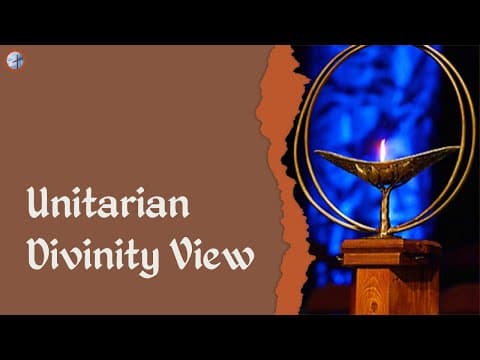
This blog post explores the Unitarian view of divinity within Christianity, emphasizing its rejection of the Trinity, the role of Jesus, and the implications for concepts like original sin and salvation. It also discusses various denominations and beliefs associated with Unitarianism, including Arianism and Oneness theology.
In the previous discussion, we delved into the concept of the Trinity, a fundamental doctrine in mainstream Christianity. Today, we will explore an alternative perspective known as the Unitarian view, which offers a distinct interpretation of divinity within the Christian faith.
The Unitarian view is characterized primarily by its rejection of the doctrine of the Trinity. Unlike traditional Christian beliefs that describe God as three distinct persons—Father, Son, and Holy Spirit—Unitarians emphasize the oneness of God. They assert that God is a singular entity, not divided into multiple persons.
God's Oneness: At the core of Unitarian belief is the idea that God is indivisible. This perspective leads to a re-evaluation of Jesus Christ's role within the faith.
View of Jesus: Unitarians typically regard Jesus as a subordinate figure rather than co-equal or coeternal with God. He is often seen as a prophet, teacher, or moral example, rather than a divine being. This view posits that Jesus was an inspired human created to fulfill God's will.
Rejection of Original Sin: Many Unitarians reject the concept of original sin, which is a significant doctrine in traditional Christianity. This rejection implies that there is no need for atonement through Jesus's death, shifting the focus towards personal growth, morality, and living a righteous life.
Universalism: To reconcile their beliefs, Unitarians often adopt the idea of universal salvation, suggesting that all individuals, regardless of their earthly actions, will ultimately be reconciled with God.
Unitarianism is not monolithic; there are various interpretations and denominations that embody these beliefs:
The traditional Unitarian view holds that God is indivisible and that Jesus is a uniquely inspired human being, serving as a prophet and teacher. The Unitarian Universalist Association is one of the largest groups representing this perspective.
Arianism is another significant Unitarian view, which posits that Jesus is subordinate to God the Father and not divine. This belief was historically deemed heretical by the early church but has influenced modern groups such as Jehovah's Witnesses, who maintain that Jesus was God's first creation.
Modalism, or Oneness theology, suggests that God manifests in different roles or modes rather than as distinct persons. In this view, Jesus is seen as God incarnate, but this belief is often associated with Oneness Pentecostalism, which blends traditional Pentecostal beliefs with Unitarian principles.
Several other minor beliefs exist within Unitarianism, including:
The rejection of the Trinity has profound implications for Unitarian beliefs. For instance, the Unitarian Universalist Association acknowledges a wide range of beliefs among its followers, including agnosticism, theism, and atheism. This diversity highlights the complexities and potential risks associated with departing from traditional Trinitarian doctrine.
The Unitarian view of divinity presents a significant departure from mainstream Christian beliefs, particularly regarding the nature of God and the role of Jesus. By emphasizing God's oneness and rejecting traditional doctrines like original sin and the Trinity, Unitarians offer a unique perspective on faith that prioritizes personal morality and universal reconciliation. Understanding these beliefs can provide valuable insights into the broader theological discussions within Christianity.
If you have any questions or would like to explore other views on divinity, feel free to leave a comment.



















