
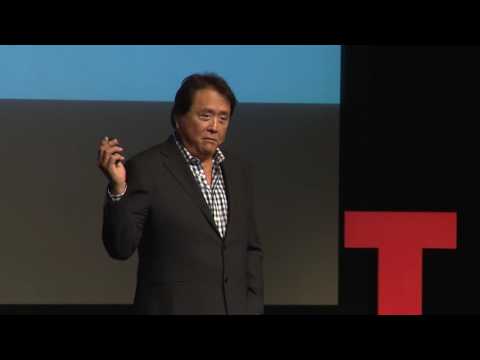
Robert Kiyosaki discusses the growing wealth and income inequality in America, emphasizing the failures of the education system in teaching financial literacy and the importance of changing one's mindset towards money to achieve financial independence.
In a thought-provoking talk, Robert Kiyosaki addresses the pressing issue of wealth and income inequality, which he describes as a significant moral and spiritual crisis not only in America but globally. He highlights the widening gap between the rich and the poor, emphasizing the detrimental effects this has on society, particularly on the younger generation.
Kiyosaki points out that the current economic landscape is unfavorable for savers. He recalls how, in 1970, saving one million dollars at a 15% interest rate would yield $150,000 annually, a sum that could sustain a comfortable lifestyle. In stark contrast, by 2016, due to policies like quantitative easing, the same amount could incur costs rather than generate income. This shift illustrates the deterioration of financial systems and contributes to the growing divide between the wealthy and the middle class.
The speaker warns that today’s unemployed youth risk becoming tomorrow’s unemployable, losing out on essential job training and skills. He argues that as incomes decline, dependency on government assistance increases, fostering an entitlement mentality rather than encouraging self-sufficiency.
Kiyosaki reflects on his own educational experiences, noting that traditional schooling often neglects financial education. He recounts a pivotal moment from his childhood when he asked his teacher about learning to manage money, only to be told that such knowledge was unnecessary. This lack of financial literacy in schools perpetuates the cycle of poverty and dependence.
Drawing from his life story, Kiyosaki shares how he learned about money from his two father figures: his biological father, who held a prestigious educational position but struggled financially, and his best friend’s father, an entrepreneur who taught him the principles of wealth creation. This duality shaped his understanding of financial success and the importance of acquiring assets.
Kiyosaki discusses the historical context of financial crashes, including the dot-com bubble, the real estate crisis, and the banking crash of 2008. He warns that the next financial crisis could be even more severe, driven by systemic issues that favor the wealthy.
He critiques tax policies, particularly the Bush tax cuts, which disproportionately benefit the wealthiest individuals. Kiyosaki argues that these policies contribute to the widening wealth gap, allowing the rich to accumulate more wealth while the middle class struggles.
Kiyosaki emphasizes that financial education is crucial for breaking the cycle of poverty. He introduces the concept of financial literacy, which he defines as understanding key financial terms such as income, assets, liabilities, and cash flow. He believes that many people mistakenly view their homes as assets, which can lead to financial ruin.
He advocates for experiential learning, using games like Monopoly and his own creation, Cashflow, to teach financial principles. Kiyosaki argues that making mistakes is a vital part of the learning process, contrasting this with the punitive nature of traditional education systems that discourage failure.
Kiyosaki concludes by urging individuals to change their mindset about money. Instead of saying, "I can't afford it," he encourages asking, "How can I afford it?" This shift in thinking can open up new possibilities and foster a proactive approach to financial independence.
Robert Kiyosaki's insights into wealth inequality and financial education highlight the urgent need for a shift in how society approaches money management. By fostering financial literacy and encouraging a mindset focused on asset acquisition, individuals can empower themselves to break free from the constraints of traditional economic systems and achieve true financial freedom.



















