
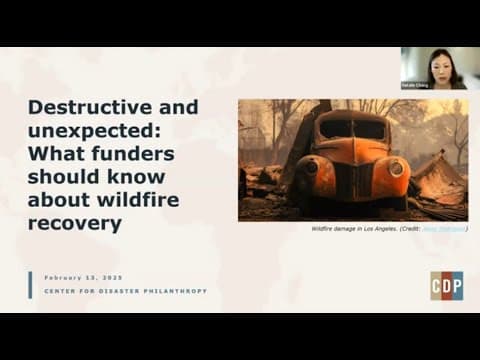
This blog post summarizes a webinar discussing the complexities of wildfire recovery in California, emphasizing the importance of understanding community needs, the role of funding, and the necessity of preparedness and collaboration among organizations to effectively support affected populations.
Wildfires have become a devastating reality for many communities, particularly in California. The Center for Disaster Philanthropy hosted a webinar titled "Destructive and Unexpected: What Funders Should Know About Wildfire Recovery," aimed at educating funders on the unique challenges and strategies involved in wildfire recovery. This post summarizes the key insights shared by experts during the webinar.
Natalie Chang, the Director of Innovation and Special Projects for CDP, opened the webinar by acknowledging the personal impact of wildfires on California residents. With the increasing frequency of wildfires, there is an urgent need for collective learning and adaptation to improve recovery efforts.
As of February 11th, CAL FIRE reported:
These statistics highlight the scale of destruction and the pressing need for effective recovery strategies.
Dr. Rose Veniegas emphasized the need to measure trust and collaboration in recovery efforts. Understanding how to build trust within communities is crucial for effective recovery, as many individuals may feel disenfranchised or overlooked.
Dr. Veniegas also pointed out that displacement often occurs in waves, making it essential to track and understand the long-term impacts on affected populations. This data is vital for tailoring recovery efforts to meet the needs of those most at risk.
Nina Knierim from CORE discussed the various programs implemented during and after disasters. CORE focuses on immediate needs, such as staffing evacuation centers and providing hygiene kits, while also planning for long-term recovery.
Katie Simmons, Deputy Chief Administrative Officer for Butte County, highlighted the complexities of recovery, noting that survivors often need one to two years to process their losses and navigate insurance claims. Awareness of these challenges can help prevent costly mistakes that lead to permanent displacement.
Katie Simmons explained that recovery funding often hinges on the presence of private insurance. For those without adequate insurance, charitable funds become critical. Funders should be aware of the various funding sources available, including FEMA assistance and community development block grants, and how to effectively combine these resources.
Dr. Veniegas raised concerns about vulnerable populations, particularly seniors and individuals with disabilities, who may not receive timely evacuation notifications. Funders should prioritize support for these groups to ensure they are not overlooked in recovery efforts.
Katie Simmons emphasized the importance of localized grantmaking. Funders should consider the unique needs of smaller-scale disasters, which may not attract significant media attention or funding. Charitable dollars can be more impactful in these situations, where federal and state resources may be limited.
Nina Knierim stressed that preparedness is a continuous process. Funding should not only focus on recovery but also on mitigation strategies that can reduce the impact of future disasters. This includes community engagement in preparedness discussions and educating residents about insurance and emergency planning.
Dr. Veniegas shared a strategy of planning in increments of five—what needs to be done in the next five minutes, five hours, five days, and so on. This approach helps organizations stay focused on immediate needs while also preparing for long-term recovery.
The webinar concluded with a call to action for funders to engage with communities, understand their unique needs, and support localized recovery efforts. By prioritizing trust, collaboration, and preparedness, funders can play a crucial role in helping communities recover from the devastating impacts of wildfires.
By adopting these strategies, funders can contribute to building a more resilient future for communities affected by wildfires.



















