
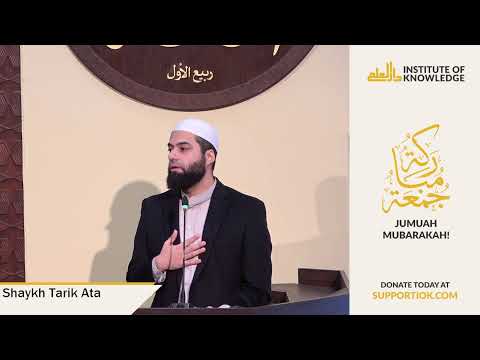
In his khutbah, Shaykh Tarik Ata emphasizes the importance of unity among Muslims, urging the community to overcome divisions created by nationalism and to embrace the spirit of brotherhood through the greeting of peace, 'salam'. He highlights the historical context of division, the significance of mercy, and the need for Muslims to support one another, especially during Ramadan.
In a recent khutbah delivered by Shaykh Tarik Ata, the importance of unity among Muslims was emphasized, particularly in the context of the challenges faced by the ummah today. The khutbah serves as a reminder of the need for brotherhood and the dangers of division within the community.
The khutbah began with a reminder to praise Allah, the Most Merciful, and to seek His protection from the evils within ourselves and the consequences of our actions. Shaykh Ata called upon the community to be conscious of Allah in their daily lives and decisions, urging everyone to embody the principles of taqwa (God-consciousness).
Shaykh Ata referenced a significant historical event during the decline of the Ottoman Empire, where the Zionist movement approached Sultan Abdul Hamed to purchase Jerusalem. The Sultan famously responded, "It’s not mine to sell," highlighting his commitment to the ummah. This moment serves as a reminder of the importance of standing firm against external pressures.
The khutbah then transitioned to discuss the impact of colonialism, particularly how the British Empire introduced nationalism, which fragmented the Muslim community. The arbitrary borders drawn by colonial powers have led to divisions among Muslims, such as the Kurdish people being split across multiple nations. This division is a strategy employed by those who wish to weaken the ummah.
Shaykh Ata drew parallels between historical events and the present day, recalling a story from the time of the Prophet Muhammad (peace be upon him). A member of the Jewish community attempted to sow discord among the Ansar by reminding them of past conflicts. The Prophet intervened, emphasizing that such divisive sentiments are despised by Allah. This historical lesson underscores the importance of unity and the dangers of allowing external influences to create rifts within the community.
A significant portion of the khutbah focused on the greeting of peace, "salam." Shaykh Ata explained that this greeting is not merely a formality but a profound expression of care and a prayer for protection from harm. He encouraged the community to enrich their understanding of this greeting, emphasizing its role in fostering unity and compassion among Muslims.
The Prophet Muhammad (peace be upon him) instructed his followers to spread salam widely, making it a customary practice. This act of greeting serves to strengthen bonds within the community and is a reflection of the mercy that Allah has bestowed upon humanity.
Shaykh Ata addressed the issue of cultural and ethnic divisions, particularly in the context of marriage. He urged parents to recognize that their children, who are often more aligned with fellow American-born Muslims, should not be restricted by outdated notions of ethnicity. The khutbah highlighted that unity transcends cultural boundaries and that embracing diversity within the ummah is essential for its strength.
The khutbah concluded with a powerful reminder of Allah's mercy. Shaykh Ata emphasized that Allah's mercy precedes His anger and that Muslims should embody this mercy in their interactions with one another. He encouraged the community to support those who are struggling with their faith or sins, reminding them that the mosque should be a welcoming place for all.
In this month of Ramadan, Shaykh Ata called upon the community to strive for improvement and unity. He urged Muslims to be vigilant against those who seek to divide them and to remember that their strength lies in their ability to come together as one ummah. The khutbah serves as a timely reminder of the importance of brotherhood, compassion, and the need to support one another in the face of adversity.
As the ummah faces challenges both locally and globally, it is crucial to foster an environment of unity and support, ensuring that every member feels valued and included. The call to spread salam and embrace diversity is not just a message for Ramadan but a lifelong commitment to building a stronger, more united community.



















