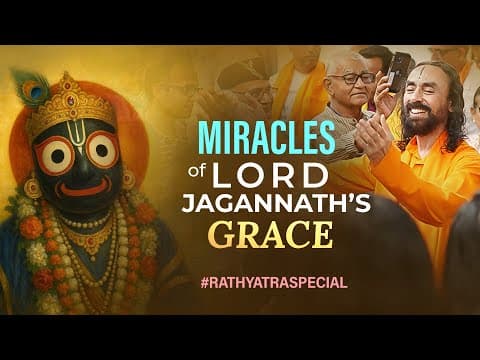
This blog post explores the profound spiritual teachings derived from the story of Lord Jagannath, emphasizing the importance of daily sadhana, self-awareness, and cultivating a deep longing for God. It highlights the experiences of poet saints and the transformative power of devotion.
In the heart of Jagat Puri, one of the greatest poet saints in Sanskrit literature, Jayv Gowani, dedicated his life to the devotion of Radha Krishna. His experiences and teachings continue to inspire countless individuals on their spiritual journeys. This blog post delves into the enchanting story of Lord Jagannath, revealing how it can unlock your spiritual power and guide you towards a deeper connection with the divine.
Jayv Gowani had a profound vision of Shri Krishna, who played an enchanting melody on his flute by a stream nestled between mountains. This vision inspired him to compose the epic poetry known as the Gowind, which consists of twelve chapters. His devotion and creativity left a lasting impact on the spiritual landscape of India.
Years after Jayv's samadhi, a gardener lady began to sing the verses of the Gowind while plucking vegetables in the early morning. Unbeknownst to her, Lord Jagannath would follow her, enchanted by her singing. This unusual occurrence caught the attention of the temple priests and eventually reached the king of Puri. In a dream, Lord Jagannath revealed his love for the Gowind and his desire to hear it sung.
The king, inspired by this revelation, attempted to write poetry himself. However, his verses lacked the profound impact of Jayv's work, leading him to despair. In another dream, Lord Jagannath reassured the king that twelve verses from his writing would be added to the Gowind, illustrating the divine grace that can transform our efforts.
The story emphasizes the power of spontaneous love and devotion, which transcends complex rituals and mantras. It highlights that true spiritual practice stems from a heartfelt connection with the divine rather than mere intellectual understanding.
A humorous anecdote illustrates this point further. A scholar, seeking to teach complex prayers to three sadhus, found that they were more spiritually advanced than he realized. Their simple prayer, which expressed their relationship with the divine, resonated more deeply than the intricate mantras he taught them. This encounter serves as a reminder that simplicity and sincerity in prayer can often lead to greater spiritual fulfillment.
To cultivate spiritual power, it is essential to establish a daily sadhana. The scriptures recommend dedicating two hours each day to spiritual practice, which is one-tenth of our time. However, in modern life, it may be more practical to commit to one hour. The key is to make a resolute decision to engage in this practice consistently.
The ideal time for sadhana is during the Brahma muhurta, the two hours before sunrise. This time is characterized by a calm environment and a composed mind, making it easier to focus on spiritual pursuits. If mornings are not feasible, practitioners can split their sadhana into two sessions, one in the morning and one in the evening.
While there is no specific posture required for sadhana, it is important to sit comfortably yet alert to avoid falling asleep. Various postures such as sukhasana, padmasana, or even sitting on a chair can be adopted based on individual comfort.
The story of Lord Jagannath and the teachings of Jayv Gowani remind us of the profound power of devotion and the simplicity of spiritual practice. By establishing a daily sadhana and cultivating a deep longing for the divine, we can unlock our spiritual potential and experience the transformative grace of God. Embrace these teachings and embark on your journey towards spiritual awakening.